
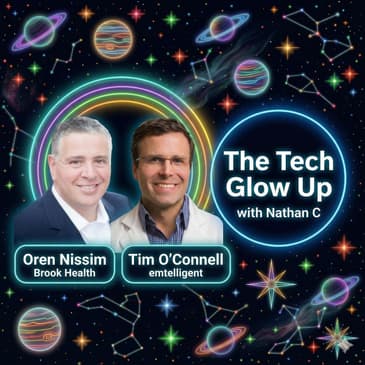

Recorded live at the VIVE event: The healthcare industry is hungry for AI standards, governance, and certification, making the need for genuinely trustworthy tech more urgent than ever. CEOs Dr. Tim O’Connell of emtelligent and Oren Nissim of Brook Health return to the show to cut through the hype and share where the industry is actually going and what applications are delivering real results today.
We dive deep into the next big applications for AI—from saving a doctor half their time on consult chart review to tackling the isolation and loneliness epidemic of chronic illness—and how to ensure this technology remains effective and responsible for everyone in the care loop.
Episode Key Moment Highlights:
- AI-Assisted Chart Review: AI-powered chart review software is already cutting a clinician's patient review times by half, dramatically speeding up decision-making for solo practices reviewing 40-page consult requests [00:01:03].
- Data Extraction Accuracy: After 10 years in business, emtelligent is seeing spectacular, state-of-the-art results for the accuracy of coding complex, unstructured medical data into clear, organized information [00:05:00].
- Loneliness Gap: For older patients with chronic conditions, having a reliable AI conversation partner 24/7 genuinely helps bridge the isolation and loneliness gap caused by their illness [00:10:05].
- Regulatory Confidence: Policy and government intervention, including increased reimbursement and new access models, are currently pushing the industry toward safe digital health in a positive direction, which Tim and Oren are encouraged by [00:14:04].
This conversation is a bold, enthusiastic look at how we build the next generation of safe digital health—one that uses effective, governed technology to genuinely support caregivers and empower patients to confidently manage their chronic conditions and navigate complex lifestyle changes at home.
Watch the full episode on YouTube and please like and subscribe to The Tech Glow Up!
About Oren Nissim:
Oren Nissim is the Chief Executive Officer and co-founder of Brook Health, a pioneering healthcare technology company dedicated to transforming chronic disease management through AI-driven, always-on remote care.
Brook’s platform blends advanced artificial intelligence with compassionate human clinical support to help individuals better manage chronic conditions, improve health outcomes, and extend access to personalized care beyond traditional clinical settings.
About Tim O'Connell:
Dr. Tim O’Connell is a practicing radiologist in Vancouver and cofounded emtelligent in 2016. He has served as vice chair of medical informatics in the University of British Columbia’s Department of Radiology since 2017.
Prior to his clinical and entrepreneurial careers, Dr. O’Connell worked as an IT professional for Nortel Networks and Bell, where he was director of engineering for the Bank of Montreal account.
A "glow up" signifies a positive transformation, reflecting the journey of becoming a better, more successful version of oneself.
At The Tech Glow Up, we humanize the startup and innovation landscape by focusing on the essential aspects of the entrepreneurial journey. Groundbreaking ideas are often ahead of their time, making resilience and perseverance vital for founders and product leaders.
In our podcast, we engage with innovators to discuss their transformative ideas, the challenges they face, and how they create value for future success.
If you're a founder or product leader seeking your own glow up, or a seasoned entrepreneur with stories to share, we invite you to join our guest list via this link.
The Glow Up talks with innovators about their big ideas, how they stay resilient in the face of change and how they find and build the value that will drive their future success.
What is a glow up - you might ask?
Glow up is defined as "a positive transformation, often involving significant changes in appearance, confidence, or lifestyle.
We use "Glow up" to refer to the process of becoming a better version of oneself, more attractive, and more successful.
If you're a founder or a product leader who's looking to have a glow up of your own - or if you're a seasoned entrepreneur who's stories can support others, we'd love to hear from you. Please add you name to the guest list with the link in the show notes.
Each episode will also feature a community spotlight for innovative NGOs, non-proffits, and other organizations that are driving innovation and change in their communities. There's another link in our bio for community groups and sponsors to learn more!
Live and direct. Hi, it's Nathan. Welcome to a very special episode of the Tech Glow Up from the VIVE Event powered by HLTH and CHIME At this year's event in Los Angeles, I talked to nearly 20 CEOs, SVPs. And clinical leaders in innovation in health technology innovation. I'm so excited to share this special episode. This week we're kicking things off with a double header Glow Up Catch Up episode with Oren Nissim of Brook Health and Dr. Tim O'Connell of emtelligent. We're gonna get two follow up interviews from these leaders that we talked to in October at the HLTH event. I'm gonna check in on the Glow Up predictions that they made last year, and i'm also gonna ask them about How they understand the state of responsible ethical ai. You're really gonna enjoy this episode, Dr. Tim helps us understand why we don't want a reverse centar of AI collaboration or AI with a human in the loop. That we always wanna keep the experts, the humans, on the decision making side of this equation. Oren Nissim won my heart over with his Glow Up goal to reduce loneliness in populations who battle chronic illness. I am so excited to catch up with Oren to hear how they're using connection to reduce the impact of loneliness, especially in older populations. For Oren effective AI is the stuff that makes a difference in our day to day there's so much work that it takes to adopt a new lifestyle or to change the one that we've grown to love. And using AI to make sure. That your behaviors align with your healthcare goals and the treatment plans that you've built for yourself is a win-win in this book. We're also gonna learn about how 24 7 access to information, answers, and support is really making a difference for older populations using AI to stay on top of their care and their schedules. Take a look for this exciting episode. Take a listen, watch and subscribe to the Health to the Tech Glow Up from VIVE
Nathan Cso we're gonna just clap it in like we did last time.
Dr. Tim O’ConnellYeah.
Nathan Cyou ready?
Dr. Tim O’ConnellSure am.
Nathan Cyou get to do it? Two.
Dr. Tim O’ConnellOkay.
Nathan C1, 2, 3. Awesome. Hello and welcome to The Tech Glow Up from VIVE Today. I have the repeat pleasure of talking with Tim O'Connell, CEO of emtelligent Tim, how are you?
Dr. Tim O’ConnellI'm great, thank you.
Nathan CAmazing. Happy to
Dr. Tim O’Connellbe in Los Angeles,
Nathan CThere's other colder places we could be this time of year.
Dr. Tim O’ConnellI'm from Canada.
Nathan COoh. Yeah, that's right.
Dr. Tim O’ConnellYeah.
Nathan CAmazing, Tim, for those who maybe didn't watch our HLTH episode
Dr. Tim O’Connellmm-hmm.
Nathan CFrom October.
Dr. Tim O’ConnellOkay.
Nathan CCan you quickly remind us about mm-hmm. The work that you do at emtelligent?
Dr. Tim O’ConnellWe do two core, we have two core lines of business. One is. large scale, very accurate, very cost effective data extraction from clinical notes and clinical documents, right? Our other line of business is we have a, a new product. We'll be launching it for self-service very soon, but it's already live in production at a customer. And it is AI assisted chart review software, right? You're a clinician, you gotta look at a patient's chart and make a decision. It really helps you out. We're seeing it cut review times by half.
Nathan CAmazing. There is so much talk Yeah. About ai. Yeah. AI is gonna change healthcare. Yep. AI is changing healthcare. It's here now. Yep. What I've heard, almost like from every person that I've been talking to mm-hmm. Is that there is a hunger for like standards. Yeah. For governance. For certification. Yeah.
Dr. Tim O’ConnellFor sure.
Nathan CLike where are we, like where's the industry at in like being ready to like be trustworthy. You know, to be trusted that what we're doing is effective. Responsible. Mm-hmm. And actually like makes a difference to the bottom line.
Dr. Tim O’ConnellI think the good news is that everyone is working on it. Yeah. Right. I think it's hard in an entire industry, particularly one as big as healthcare. Mm-hmm. to have some central authority that says, okay, we're gonna get you working on benchmarks and you working on regulations. Right. Yeah. Like, that's impossible. But the good news is that the industry really is working on it. We're getting better benchmarks for dealing with healthcare data, for ai, you know, assistance and things like that. Mm-hmm. So that's really encouraging. that's a re requirement, right? Yeah. So people are working hard on that. The regulation side. I'm not as plugged in as I would like to be on that, but I think it's, I'm sure that, you know, food and Drug Administration, health Canada, various authorities all over the world are working on this. You can be sure. Right? Yes. It's probably all they're working on right now. Yeah.
Nathan CYeah.
Dr. Tim O’Connelland I think the industry is also taking, I, I think a pretty careful approach to that. A lot of the AI products that I'm seeing, including our own at emtelligent We still wanna have the human in the loop.
Nathan CYep.
Dr. Tim O’ConnellRight? And, and we're trying to provide really trustworthy AI and referenced AI and saying, okay, I found this thing in the chart and here it is, like nurse or doctor, go confirm this before you write something down. Right? Yeah. We don't want people making up references and submitting them to court cases like we're seeing in legal
Nathan Cor in those big Yeah. Four letter or three letter consultancy. Yeah,
Dr. Tim O’ConnellProject. Yes. Also some of those, but you know, people are doing that in biomedical research. Yeah.
Nathan COh,
Dr. Tim O’ConnellUnfortunately, yeah, we're seeing AI generated content make its way into journal articles that are then being published and are searchable on PubMed, We need to do better. People need to do better there
Nathan Con the topic of we need to do better.
Dr. Tim O’ConnellOkay.
Nathan CWhat's the Glow Up that you see healthcare needs to take this year to meet where we are with these technologies and opportunities?
Dr. Tim O’ConnellWell, I think trustworthy. AI is more and more important. I think like last year I think was the year of adoption. We saw a lot of people going forward with digital scribes. Mm-hmm. Right? Like huge time saver for caregivers in creating notes, ambient ai, that sort of stuff. Like a wonderful application. I think one of the next big applications is gonna be AI assisted chart review. Mm-hmm. It's sort of why we're, we're ready for the market there, but it's all gonna be trustworthy.
Nathan CYeah.
Dr. Tim O’ConnellRight, and, and I think we need to also be helpful and careful with our clinicians. I don't think it's okay to just be like, well, we had a human in the loop. I, I think you need to provide those caregivers with tool and safety checks and other things like that so that you're not just being like, oh, this is your problem now.
Nathan CThat's a lot to push off on somebody. Right?
Dr. Tim O’Connelllot to push off on
Nathan Csomeone. Hey, we automated your workflows and now you're responsible for all of this.
Dr. Tim O’ConnellExactly. So I've heard this analogy really interesting. A center is a human head with a mechanical body. Right. And that's sort of what humans are doing using AI tools. What we don't wanna have is the reverse center.
Nathan CNo
Dr. Tim O’Connellreverse center in healthcare, which is the AI brain. Mm-hmm.
Nathan CYeah.
Dr. Tim O’ConnellRight. That doesn't sound like a recipe for a rewarding job environment for anyone.
Nathan Cthe brain's not what we want and the strengths aren't what we need. Right?
Dr. Tim O’ConnellYeah, yeah, yeah.
Nathan CSo, taking it personally. Yeah. And like obviously with these like outstanding results coming in with chart review. Yeah. But what's the Glow Up that you're working on for emtelligent in the next six months?
Dr. Tim O’ConnellWell, in the next six months we're gonna be, you know, we're actually, I'm really excited. We're submitting a paper to a conference right now that just shows spectacular results for our accuracy in. Doing, basically like coding medical data.
Nathan CYep.
Dr. Tim O’ConnellSo really excited about that.
Nathan CAnd that's,
Dr. Tim O’Connellyep.
Nathan CIn lay terms, this is potentially astounding. Yeah. That, like, that's taking all of the unstructured notes Yep. And like the hard to parse stuff Yep. Where doctors and nurses spend a lot of time Yep. That's making that into really clear, organized, like
Dr. Tim O’Connellstructuring that data,
Nathan Cstructuring that data,
Dr. Tim O’Connellquoing
Nathan CYeah. Yeah. Okay.
Dr. Tim O’ConnellYeah, so it's, I'm really excited about that.'cause I think that's something we've been working on. We've been in business for 10 years and it's, it's great to see that kind of result, like definitely state of the art. So I'm excited about that. Yeah. And then the other thing I'm excited about is, launching our AI assisted chart review platform mm-hmm. As a self-service platform so that people can just go online. And sign up and be like, you know what? I get, 20 PDFs a day for consult requests. I'm a, you know, doctor working in a, you know, solo practice and I need to review these to get to know the patients, to accept the consult or refuse it. Yeah. And I just want better tools.
Nathan CYeah.
Dr. Tim O’ConnellI'm tired of just using a PDF viewer to go through 40 page document and hoping I find the needle in the haystack.
Nathan CYeah. This is an example that I absolutely love. Yeah. But like in innovation, I always advise founders. Yeah, right. Like don't use the discovery call to find out that it's the wrong
Dr. Tim O’ConnellRight.
Nathan CClient. Yeah. And this is like, we're not even using it to diagnose or treat the patient. Right. We're just trying to see. Is this a good fit for my practice? Totally. And am I interested in this kind of patient? Yeah. Like can I take on and like Absolutely. To help a doctor with that kind of decision. Like let's be fast.
Dr. Tim O’ConnellYeah.
Nathan CSo that we can go do the healthcare.
Dr. Tim O’ConnellLet's save you
Nathan Ctime.
Dr. Tim O’ConnellDrag, drop, look, read, search. Next patient, right?
Nathan COh, and it can use the health data, but it doesn't have to be an expert in it to like get the results they need.
Dr. Tim O’ConnellNo, no,
Nathan Cno. So good.
Dr. Tim O’ConnellCould even be patient facing.
Nathan CWe'll see where it goes. I have two last questions, and we're almost ahead of time, I think, instead of the spicy hot take.
Dr. Tim O’ConnellOkay.
Nathan CI really enjoy learning how like entrepreneurs and folks in the medical profession have like, leaned on their support systems Yeah. To get to where they are.
Dr. Tim O’ConnellOkay.
Nathan Chow have mentors and coaches and guides
Dr. Tim O’Connellmy
Nathan Cbeen a part of your journey as a leader,
Dr. Tim O’Connellit is all a support system.
Nathan CIt's all support
Dr. Tim O’Connellsystem. It's all support system, support systems all the way
Nathan Cdown.
Dr. Tim O’Connellso incredibly grateful to so many mentors and other people I've had in my life who've helped me in my medical career, in my business career, you know, well-intentioned friends, you know, providing you advice. Yeah. And of course my family.
Nathan CYeah,
Dr. Tim O’Connellright. Like I literally cannot do anything without my wife. So she gets big props.
you.
Dr. Tim O’ConnellYeah.
Nathan CYeah. I, I was actually having this conversation last night that like, when you see a magnetic person out in the world mm-hmm. Like, you can almost bet that they have like a really fantastic support system.
Dr. Tim O’ConnellYeah.
Nathan CIt's like, that's how you can show up that way.
Dr. Tim O’ConnellIt, it, it takes a village.
Nathan CIt does. Tim, thank you so much for joining me. My pleasure.
Dr. Tim O’ConnellOkay.
Nathan Chaving me. Until our next time on the Tech Glow Up,
Dr. Tim O’ConnellI'll look forward to it. Amazing. Let's clap it out. 1, 2, 3. Nailed it. This is the most fun podcast I get.
Nathan Cwe clap it in. Three, two. 1, 2, 3. Hello and welcome to the Tech Glow Up. I'm Nathan C, live from VIVE, and today I'm here with Oren Nissim, a repeat guest, CEO of Brook Health. Oren. It's so good to see you again.
Oren Nissimsee you. Thanks for having me.
Nathan CHow is your vibe going?
Oren NissimIt's going well. I'm afraid we lost a few of our East coast, cor meds because they got stuck with the storm, but it is what it is.
Nathan CSo, Oren, just to catch us up, for this segment, could you remind us what you do at Brook Health?
Oren NissimSure. So, we're the remote care company and we provide the tools and services to manage people with chronic conditions at home.
Nathan CWhen we talked at HLTH about a hundred, 110 days ago or so. Who's
Oren Nissimcounting?
Nathan Cwe talked about a Glow Up that you had, for the healthcare industry and I, it stuck with me, if I'm being honest, because of like the heart that was involved in this vision that you had. For reducing the loneliness epidemic for people who have chronic illness, right, that are isolated and, that are isolated due to their illness. do you have a report? how has this very audacious goal, how has it been working on this very audacious goal?
Oren Nissimone of the key experiences, for us lately is that, we're seeing, a huge amount of impact in cardiovascular risk. Mm-hmm. We are just about to, release a really, really important, study in that world, and for me, connecting that back with that loneliness thing, let's think about this individual. Mm-hmm. they ended up with a. Problem. They ended up in the hospital. They go home. The first thing that they did was Googled and ended up finding that there is a very likelihood that they are not necessarily gonna be with us for a lot longer. Yeah. It's really, really scary. and the main problem is how to give them agency and the tools. And I think that, when we talk about ai, one of the key things that people say is like, you know, can I really trust in the ability to really kind of chat with this thing? And what they're missing is, especially if you, with the older age, the older age actually doing really, really good well mm-hmm. With discussing with ai because it feels like this thing that I can rely on and actually converse with 24 7 and actually bridges. The loneliness gap in a way. Mm-hmm. So it deals with the function of the care, but it is also dealing with the underlying function of, I just want somebody to talk to and I would just want somebody to be able to give me advice unsolicited yet 24 7 and, and, you know, how do you get that from a human?
Nathan CMm-hmm. this phenomenon of when AI can help me. With answers that are important, that patients will start to go back to it for other purposes. Yeah, or will go into deeper conversations is something that I've heard like kind of anecdotally pop up that's like super encouraging, right? Like we hear a lot about ai. What. Effective what's actually working and like where's the data? Where are we at? Is like hard. Do you have a, like an opinion as somebody who's like very much trying to be impactful with AI in healthcare, where, what is, like, what's the standard for effective responsible AI in healthcare? Like, where are we at today?
Oren NissimI think the standard is that, directing it to have more. Not the hardcore medical do this. Mm-hmm. Instead of that, because there's so much regulatory hurdles that we still need to go through. Rightfully so, by the way, I don't, I don't think it should be solved really quickly. Yeah. but everything above and beyond that, if you, if you take a patient and you say, well, that's analyzed what actually happened in a particular conversation. Somewhere between 80 to 90% of the conversation is about how. Is this one particular medical advice actually gonna get adopted into my lifestyle? Which medications can I afford? Can I really adopt into this new behavior that I need to be into? Why am I afraid of it? Mm-hmm. What is my, you know, what are my personal hurdles with not being able to do it? So I think the standard. Really focuses on the, some people call it lifestyle. Mm-hmm. When they use that sentence, it almost degrades what it really is, because this is not about, hey, you know, have the next smoothie or whatever. Mm-hmm. This is really genuinely about how do I adopt into, oh, I'm gonna be on this particular med, it's going to change my diet, it's gonna change other lifestyle habits. I'm gonna sleep better, I'm gonna sleep worse. Other things are gonna happen. So how. Do I navigate myself into that place? That is supposedly better for me.
Nathan CYeah.
Oren NissimBut I'm having a hard time adopting.
Nathan CYeah.
Oren Nissimthat's true advice whereby somebody actually is holding you by the hand. As opposed to, I'm gonna throw this at you and now good luck and see you later, which is currently what's happening.
Nathan CYeah.
Oren NissimSo I think if you can really, you know, kind of double, down on that particular thing that's a meaningful,
Nathan COne of the best experiences I ever had with like an AI agent. Was a very opinionated agent that really wanted to have a conversation.
Oren NissimSure.
Nathan CAnd it showed me how important, like that communication, having a purpose and having something that drives it. Because if you're just like shoveling information at people Yeah. Like I'm sure we've all had the like experience where Chachi PT just like gives a five page answer and you're just like, when is my flight? You know, like I don't need an analysis of flight patterns. So this, like absolutely getting to the right level, I really appreciate. So as we think about 2026 and like where, what, you know, where we're at, I loved your bold vision for the future, you know, in October, where based on where we are today in 2026, the, I mean, even the last a hundred days, a lot has changed. what is the Glow Up that you think healthcare needs to be focused on this year?
Oren NissimYeah, there are so many trends happening right now within the world of, what the administration's actually pushing towards with. They increased the reimbursement. Mm-hmm. Which was great. Yeah. Now they have, launched the new access model, which is all about, another tier of how to provide services to these communities, especially rural, especially people who don't have access. Yeah. there is a new, program which is being driven by, RPA age to get more people to participate in this, in this audacious goals of how to actually make it fully autonomous. Such that it is safe and FDA approved and, and you can trust it as a consumer at home. Yeah. So there's so much ambition in just trying to, you know, create this new paradigm of we can use safe digital health.
Nathan CYeah.
Oren Nissimwell supervised, well governed on the one hand side, but the same time much more open to the rest of the market. So I'm very encouraged by that. And the reality is that. Listen, I, I, I, I felt forever that, you know, technology is available already. You and I can do this today.
Nathan CYeah.
Oren NissimSo it's really more about like, how do you take care of the hurdles in the middle mm-hmm. So that just consumers can have it. And just like you have Amazon, like why can't you have the.
Nathan Cyou touched on a couple things that I wish we had time for, which is around like the trust and the certification and the government side of AI is like the theme that I'm hearing. we're close to time. So in like a minute or less, do you have a hot take about the state of healthcare it, today? Or it could be culture, ai, or otherwise.
Oren NissimI think it's about the double-edged sword of the, of, of the intervention from, from above. And is this gonna be, a, a good for the industry or bad for the industry? the reality is that, you know, because. We end up in models whereby, you know, taxpayer money gets involved. Mm-hmm. That gives it some sort of the legitimacy of, of that happening. Yeah. On the other side, of course, you've got lots of industry leaders who are gonna say, you know, I, I know to figure this out better. and I think it's gonna continue to be a very health debate, but, I, for 1:00 AM like everything I've, I've been seeing over the last, especially the last three months
Nathan Cmm-hmm.
Oren NissimI think is going the right direction.
Nathan Cinteresting. Policy drives innovation, drives policy.
Oren NissimYeah, it does.
Nathan CI love it. Or in the, CEO of Brook Health, it has been such a delight to check back in with you on this Tech Glow Up. Catch up. thank you again for talking at VIVE. All we gotta do is clap it out.
Oren NissimThank you so much.
Nathan CAwesome. 1, 2, 3. Thank you. So good. Good to see you. Yes can I ask you a favor? If you really enjoyed this episode, could you share it on your Instagram stories or maybe post the link with what you enjoyed on LinkedIn? The sort of sharing and engaging really helps small podcasters like me reach the audience that I know really cares about these kinds of conversations. If you've made it this far in the podcast, I really appreciate you. Thanks for listening. Please make sure to like and subscribe so that you never miss an episode of the Tech Glow Up. And hey, can I ask you a favor? If you really enjoyed this episode, could you share it on your Instagram stories or maybe post the link with what you enjoyed on LinkedIn? The sort of sharing and engaging really helps small podcasters like me reach the audience that I know really cares about these kinds of conversations.