

Value-based care has a transparency problem. Payers have their number. Providers have their number. Nobody can agree on what truth is — and that disagreement is quietly costing providers money they should be reinvesting in their communities, their staff, and their patients.
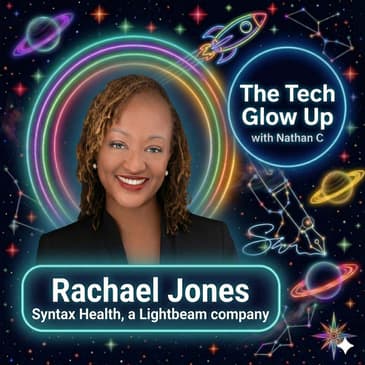
Rachael Jones, CEO of Syntax Health, a Lightbeam Health Company, spent 25 years in healthcare — starting in a hospital in Paterson, New Jersey, moving through Empire Blue Cross Blue Shield, Anthem, and multiple software companies — before building Syntax specifically to solve the friction in value-based care contracting.
Her platform and services do three things: help organizations understand a contract before they sign it, negotiate with leverage and clarity, and track performance while they're in it so they're not flying blind. Now as part of Lightbeam, Syntax connects that actuarial intelligence layer to Lightbeam's AI-enabled risk analytics, care management, and population health tools.
Her metaphor for the Syntax Glow Up: helping clinicians and quality teams understand if the juice is worth the squeeze. Providers work hard. The question is whether the contract is structured to reward that work — or whether you can climb the hill and still not find the pot of gold.
Key Moments:
- [00:02:14] Three things Syntax does better: understand, negotiate, and perform inside a value-based care contract.
- [00:04:59] Origin story: from Jamaican immigrant to hospital administrator to "the dark side" at Empire Blue Cross Blue Shield.
- [00:08:12] The abscess tooth in healthcare: change management. "If we don't figure out what change management looks like, nothing you do is going to matter."
- [00:09:03] The 2026 Glow Up: payer-provider alignment on a shared source of truth for cost, quality, and risk.
- [00:22:04] Spicy hot take: "AI will not fix healthcare contracting. The math has to math."
Recorded live from the Vive 2026 event.
Catch the full conversation on YouTube → https://youtu.be/99lwANl1RbU
Join the Tech Glow Up newsletter on Substack → https://substack.com/@mxnathanc
About Rachael Jones:
Rachael Jones is an award-winning healthcare executive, thought leader in advancing Value-Based Care, and self-proclaimed “healthcare analytics nerd” adept in telling stories with data.
As a deep Value-Based Care expert, her distinguished career spans over 25 years in senior leadership roles for some of the largest health insurers and healthcare IT solutions providers in the U.S including Cotiviti, Anthem, HealthFirst, and the TriZetto Group.
A champion of transformational change, Rachael is passionate about improving the healthcare landscape, with a longstanding history of success in delivering innovative products, performance-enhancing analytics, growth-enabling operational and investment strategies, and cost-of-care controls.
A "glow up" signifies a positive transformation, reflecting the journey of becoming a better, more successful version of oneself.
At The Tech Glow Up, we humanize the startup and innovation landscape by focusing on the essential aspects of the entrepreneurial journey. Groundbreaking ideas are often ahead of their time, making resilience and perseverance vital for founders and product leaders.
In our podcast, we engage with innovators to discuss their transformative ideas, the challenges they face, and how they create value for future success.
If you're a founder or product leader seeking your own glow up, or a seasoned entrepreneur with stories to share, we invite you to join our guest list via this link.
The Glow Up talks with innovators about their big ideas, how they stay resilient in the face of change and how they find and build the value that will drive their future success.
What is a glow up - you might ask?
Glow up is defined as "a positive transformation, often involving significant changes in appearance, confidence, or lifestyle.
We use "Glow up" to refer to the process of becoming a better version of oneself, more attractive, and more successful.
If you're a founder or a product leader who's looking to have a glow up of your own - or if you're a seasoned entrepreneur who's stories can support others, we'd love to hear from you. Please add you name to the guest list with the link in the show notes.
Each episode will also feature a community spotlight for innovative NGOs, non-proffits, and other organizations that are driving innovation and change in their communities. There's another link in our bio for community groups and sponsors to learn more!
I think my biggest theme as a company and, and certainly with this role is transparency and alignment in healthcare.
Nathan CRachel Jones, CEO of Syntax Health, a Lightbeam Health Company. Brought the fire to her Tech Glow Up interview from the Vive event. She's not messing around when it comes to fixing the friction in value-based care. One of the big problems, especially in value-based care, is aligning on a source of truth when everybody has their own record, their own document, their own history, it's really hard to get everybody seeing eye to eye and aligned on the true cost and quality of care You'll love this metaphor: syntax Health helps clinicians understand if the juice is worth the squeeze. It helps providers move from just keeping the lights on to really understanding where the juice is worth the squeeze, and how they can invest in care and outcomes that really move the needle. Okay. 1, 2, 3.
RachaelHow was that?
Nathan CHello and welcome to the Tech Glow Up. I am Nathan C, and today I'm talking with Rachel Jones, CEO of Syntax Health, a Lightbeam Health Company.
RachaelThank
Nathan CCan you introduce yourself and what you do in the Syntax Health Division?
RachaelAgain, my name is Rachel Jones. I'm the CEO of Syntax Health, a recent addition to Lightbeam Health Family of companies. I have about 25 years in healthcare at this point. The last 15 focused on value-based care especially, and what we do at Syntax is to connect the gaps that's missing in value-based care contracting. To add financial clarity to performance, health outcomes through an actuarial lens?
Nathan CMm,
Rachaelyeah.
Nathan COkay. on like a day to day level
Yeah.
Nathan CWho are you helping and what, what parts of that equation, are you really focused on driving and innovating?
RachaelYeah, so we work with payers and providers. particularly the ones who are working on value-based care arrangements, that could mean anything from your P four P to your shared risk upside, downside, full capitation. If you are working on a value-based care arrangement on alternative payment model, our platform and our services designed to help you do three things much better. Yeah. Number one, understand your contract before you sign, so you walk in there with confidence and clarity about what is the actual earnings potential. Or savings potential, depending on what side of the alley you're on, right? Mm-hmm. Of that contract. Number two, negotiate with confidence so that you have a seat at the table and you understand what your leverage points are, right? Mm-hmm. And where the points of failure might be in the contract term. And finally, when you're in the contract, which is where most of this kind of falls down in the execution layer.
Nathan CMm-hmm.
RachaelOur platform and service is designed to help you understand how you're performing while you're in the contract. So you're not flying blind, you're making decisions based on fact, not feelings. Mm-hmm. And that you actually understand if you're moving the needle on your value-based care performance.
Nathan CYeah. You find that you're lacking? Or like the contract is underperforming. Are there tools there to help?
RachaelSo prior to Lightbeam syntax stayed very much in the actuarial intelligence contracting lane. So our thought was. Let's be the financial experts to tell you how much the contract is worth and how much you are able to go ahead and strike. Mm-hmm. Towards that amount. We didn't have the tools to say, if it's a thousand dollars over here, or a hundred dollars over here, go get that a thousand dollars, right? Now, with Lightbeam, Lightbeam brings into the play. A long history of AI enabled solutions, risk analytics, care management, remote patient monitoring, all these different population health and clinical tools and assets that we didn't have before. So now our clients who are working with us, who are also light beam clients, get the best of both worlds and we can offer our clients and introduction to light lightbeam tools, they don't have one.
Nathan COne of the the challenges, right, when we're talking about clinician time. When we're talking about the time that, you know, health systems have to spend with patients, right? The management of the business side is always one of the things that just feels so far away from what everybody's mission yes. And why they're there. And so making it faster and easier. to be focused on those things. I'm so curious, Rachel, what's your origin as like somebody working in healthcare and innovation? I mean, you, you don't start as a CEO of like an actuarial approach
RachaelMy origin story, I'm actually, It's quite unique, I think. Mm-hmm. Because I didn't set out to do any of this. I'm Jamaican by birth and heritage, so I came here, in my, when I was 10, 10 and a half. And a lot of Jamaican culture is three jobs matter, doctor, lawyer, or nurse or engineer maybe. Right. So, I chose, chose. If you're lucky, I chose Exactly. So for me it was a doctor path. My entire family has been in some sort of healthcare. Mm-hmm. At some point, my dad was a head chef at a hospital growing up. so I grew up in the hospital setting. And so I, I was really set on being a physician and then I went to grad school and decided I was going to, instead of being a physician, be an administrator for a hospital. So I actually started my career in the hospital system
Nathan Cmm-hmm.
RachaelAnd worked in an urban setting in Patterson, New Jersey. but then got recruited to the dark side, as they say, to, to Empire Blue Cross Blue Shield. But we, I went into the health insurance side and I saw how much there was of systems, and processes that needed data and insights and I'm, I'm a systems thinker, I think in, in connecting boxes and connecting people for success. and I just got really, and fell in love with the process of trying to make this healthcare system better for all, right? Mm-hmm. Versus working in one hospital. I thought if I could expand my reach and think how can I support something on a, on a larger basis and the kind of just kept going from there. And I've oscillated between health plan, deep health plan experience mm-hmm. And software companies because I think that you kind of get the best chance to make an impact in both places. Right? Mm-hmm. Because technology and software is how we innovate and move towards the future, right? Yeah. but so much of technology fails in execution and it falls apart in operations. So I felt like if I had the ability to now work on the, on the health plan side and take that technology and deploy in a way that could actually execute with excellence, right? Yeah. Then I could see if that technology is real. Yeah. So I really spent half my career on both sides. Half on the tech side, half on the health plan side, and really have this fundamental. belief that if you can apply that innovation in the right way mm-hmm. In a boots on the ground way that's real and it's not hype, you can actually make a difference.
Nathan CYo, I, the foundation of awesome future as like an idea really came from a very similar pain point that in innovation enterprise, you know, in this case large hospital systems. Wants to be innovative but really doesn't understand what it means to work with startups, to work with disruptive technologies, how to roll things out, how to plan, you know, the whole digital transformation, human centered design systems. Like that's hard. Yeah. And. Small innovations don't often understand, you know, startups and technologies have a very outsider perspective of the problem.
RachaelYes.
Nathan CAnd that gap is often where like very good ideas and like important problems kind of just fall down a hundred percent. And, and everybody leaves kind of. Yeah. Wanting more and like scared.
RachaelYeah.
Nathan CYou know, to try again when, so,
Rachaelchange management is the secret. abscess tooth in healthcare. if we don't figure out how to make people understand what change management process looks like.
Nathan CMm-hmm.
RachaelNothing you do is gonna matter.
Nathan CWell, I think I might have figured, so my next question is about the Glow Up. You think healthcare needs to take. In 2026, I'm curious. Is it about change management? Is it about ai or re what? Where does healthcare need to Glow Up?
RachaelSo, so change management as a foundation across everything? Yeah. Let's just start with that. That's table stakes, but specifically I think that one of the Glow ups I'm really excited about is alignment between payers and providers.
Nathan CMm-hmm.
RachaelFinally, I think we're getting to a place where we're realizing that we're not gonna make progress if. You have your number and I have my number, and we can't agree on what the number is, truth.
Nathan CMm-hmm.
RachaelI think, you know, AI is, is certainly all you hear about, especially at this conference, all you hear about is ai. I think if we can leverage AI in a way that allows us to agree on what truth is.
Nathan CMm-hmm.
RachaelRight? Because we all know truth has been a little bit fluid, right? Mm-hmm. Depending on your side of the coin and your perspective, but if we can at least say, look, it may not be perfect, but this is our best representation of what truth is. S your cost, your quality, your experience, your risk, these tenets of healthcare economics.
Nathan CMm-hmm.
RachaelIf we can agree on what the truth is on both sides, then we can agree on what good looks like. And then we can align on a path to get there.
Nathan CYeah.
RachaelI think that would be a tremendous Glow Up.
Nathan CAnd you think we can do that in a year?
RachaelI think we are making progress. Yeah. I think people expect to see, see change in healthcare and that's really rare. Exactly. So we like to say at nacs, we meet you where you are and you start where you, Maya Angelou said it best. Start where you are with what you have. Right. And do better. Do the best you can until you can do better. When you know better, do better, right?
Nathan CYeah.
RachaelAnd so for us it's, we can't solve world hunger. We can't solve all these challenges, but if we can align on what the cost of care economics look like, Between payer and provider and be that neutral. Third party that's saying here, here is the version of the, the data that you both agree is the truth.
Nathan CYeah.
RachaelAnd let's set some guidelines and some benchmarks and some goals and incentive and create a payment model that incentivizes that behavior. And let's move towards that.
Nathan COh my God. Just based on the things that you've been saying, right. This idea that having better clarity on the balance of the contract. Having better clarity into, what, what parties are agreeing to. One, like not only builds better contracts, but turns what might have been like potentially adversarial or, imbalanced relationship. And kind of pushes it back, right. Like there's a lot of examples where the financials push the care away from where it needs to be. Mm-hmm. But this seems like it's kind of aligning a hundred percent all those sides on truth, so that we don't have to argue about that again, and that we can just go forward with the best care. Yeah. That's so cool. Yeah.
RachaelSyntax.
Nathan CSo, Rachel, for the work that you're doing at the Syntax Division
RachaelYes.
Nathan CWhat's the Glow Up you're looking to make, for your own work and your own team?
RachaelYeah. You know, I think one of the things that I'm really excited we've been, we created syntax three years ago to solve this challenge. You mentioned it earlier. The friction in value-based care. Right. Removing that friction, really driving towards collaboration and transparency between both sides. Mm-hmm. And I believe we did that. We were successful in creating that platform and that source of truth. Now with Lightbeam, the Glow Up I think for us is, can we connect the dots and help clinicians and clinical teams, cool Quality teams understand all the stuff they're doing. Mm-hmm. Is the juice worth the squeeze?
Nathan COh,
RachaelBecause there so much work. Happening on the every day to day boots on the ground. We see it firsthand. The providers that we work with, the payers that we work with, people really care about doing the right things. Mm-hmm. And are trying really hard to achieve these outcomes. But they're running in 10,000 different circles. So if we can help through the, through the syntax lens, quantify what you can expect to earn. In your quality programs or not, or because how the contract is structured, you may climb this hill and not find the pot gold at the rainbow.
Nathan CYeah,
RachaelYou may still decide to climb that hill because perhaps it's the right hill for your patient, or it's the right hill for your organization
Nathan Cor being on top of that hill.
RachaelCorrect.
Nathan CIs the right next step.
RachaelCorrect. But you won't at least you won't go there blindly and you won't have this. You called it out earlier. This massive let down and confidence. Crusher that happens when you work so hard and you still miss the mark.
Nathan CYeah.
RachaelI can't tell you how many providers we've talked to that said we did everything right on paper. We did everything right, and we still didn't get a payment. We still didn't get, you know, what we're expecting out of this contract. Mm-hmm. And, you know, again, you're doing this work because it's the right thing to do, but you're also doing this work and it's your community
Nathan Cand
Rachaelwhat folks will understand is for most providers. The fee for service, fee, schedule-based reimbursement is just sort of to keep the lights on. Mm-hmm. How they reinvest in their communities, how they buy new technologies is through these value-based programs. Mm-hmm. And so if they're not earning what they should be earning, that's also hurting the overall healthcare industry. Right. Because they can't take these funds and reinvest it back into their systems.
Nathan CThere's like two or three ways that.
RachaelCorrect.
Nathan COne of the things that I am like always interested to learn from CEOs and leaders in innovation is how mentors and guides have like helped them. Helped you
RachaelYeah.
Nathan Cbeing a leader sometimes requires a lot of like, both confidence Yeah. And like, acceptance of unknowns. Mm-hmm. and mentors, coaches can be the things that really help you stay focused and, and connected to the work.
RachaelYeah.
Nathan CCan you share how Mentors have impacted your journey?
RachaelI, I've been really blessed in my career to have worked with some incredible people. Men and women who have invested in me, saw something in me. I worked, with a woman, Barbara needs, she's a PhD and a nurse. and she was the one who taught me about systems and quality. and the sort of connecting the dots and thinking in a, a way that is holistic. And realizing that every single problem is usually a symptom of a larger problem. And if you can find that root cause you can usually fix systematically, right? I credit that to her. And then when I worked on the, Anthem, I'm sorry, the health insurance company side, I worked for a man named Dan McCarthy. and he taught me as an analyst, my mantra, right, which is trust but verify. and that everything is figureoutable.
Nathan CMm-hmm.
RachaelIf you can break it down into, its, into its pieces, and do your homework right. Don't just take the first answer and be lazy. Do your homework, and really just verify that, you know, you're right. Right. That was his favorite question. How do you know you're right? You couldn't walk into his office without, you know, a backup to your backup. And so, the dear, dear mentor, he passed away a couple years ago and, you know, a big loss to the healthcare community. But he is someone that I treasured and really enjoyed working with for many years. but I will say lastly, this is something in the last three years and working through Syntech. I've had the ability to work with community health centers. Mm-hmm. through the National Association of Community Health Centers, through our community health center clients. And you talked earlier about being removed from the day to day. Right. Working in software companies, working in big, big health insurance companies like Anthem. I wasn't working with a lot of the community health centers folks directly. Mm-hmm. The last three years through our work with Syntax, I've had the pleasure of working with some incredible organizations, MCR, health Regard, healthcare Alliance, pan Care, Florida. The list goes on, and I wanna shout out nac, national Association of Community Health Centers. I wanna shout out every single community health center that's out there that's working to improve in their communities the most underserved, the most at risk, most vulnerable members with. Pennies on the dollar of reimbursement. Mm-hmm. And we've been able to help them realize additional revenue income through value-based care. but I've also seen their leadership and that's been a mentor to me because watching them lead through some tough times through hurricanes and natural disasters and budget uncertainty. Mm-hmm. That's when true leadership really shows up.
Nathan CWe get excited, especially like at events like this. Yeah. About like the press releases, the partnerships, the announcements. But right where the impact often happens is in those moments where, things go a little bit askew. Yeah. Oh my goodness. Rachel, before I ask you for your spicy hot take. you, you've mentioned right, how AI is very much the conversation and, how trust mm-hmm. And understanding, you know, the, what is, what is the source of truth, what are we agreeing to, is such a, is a key thing for these kinds of partnerships that you're working in. I've been super curious to ask. What does responsible, effective revenue driving AI look like in healthcare today? Beyond like the predictions, beyond the hype, like where are we at in being responsible with the data being effective and how it. Being used and like,
Rachaelyeah. So I'm not gonna answer for all of healthcare. But I'll answer from my point of view.
Nathan CAmazing.
RachaelWhich is through the value-based care contracting lens. I think that there are sort of application points for ai. That's been around for a long time, and that's also emerging, right? So the idea of predictive models is not new. We've had predictive models for a long time, but now we're thinking about, okay, can we move from predictive to prescriptive? But even in prescriptive space, right, there is still an opportunity to make sure that the models are trained, that they're not bi introducing an unfair bias in those models, that they're built off of enough diverse data sets. perspective and that there's still some sort of clinical and human intervention before the actual patient point of care point, right? Mm-hmm. I think on the actual. Contracting itself side, I'm excited about leveraging AI tools to reduce the, this, the audit, the inefficiency and lack of automation. Yeah. Right. We're still doing Excel spreadsheets. We're still doing PDF documents. We're still having people read. Through toes
Nathan Cwritten approvals.
RachaelYou know, can we do that a little bit smarter? Yeah. Can we get better at that? And I think that's a real application of ai, right? Mm-hmm. When you can help you summarize information quickly, it can help you to sort of distill information down to what the things you should care about. Flag the things in a contract that like we do to say, if you see this term, it probably means this outcome. Let's explore that. Right? So anything we can use AI to sort of make Monday mornings easier. For the administrator,
Nathan Cyo.
Rachaeland probably the last one I'm super excited about from an AI perspective is on the clinical side.
Nathan CMm-hmm.
RachaelI'm learning more about conversational ai Yeah. And using AI to just to make patient calls and to make. Scheduling easier. I mean, as a working mother, you, you have to sort of block out two hours sometimes to just get appointments booked. Right? Trying to make the phone call, check the calendars, do all the confirmations. I listened to a, a demonstration the other day at Lightbeam where they had a, a conversate. Co conversative, I'm saying that wrong. The AI agent, right. Make the call and lead someone through a conversation to check the availability of the physician to check against their particular insurance and coverage. Mm-hmm. And to book the appointment all on the phone without a human intervention. Right. Yeah. I do think things like that, when done well. Can really shrink the gap between patient engagement and clinical outcomes.
Nathan CYeah.
RachaelI'm excited about things like that where you can actually. See it save time and, and benefit the system.
Nathan CI love that you described the agent like driving the call.
RachaelYes. Yes.
Nathan CBecause if you give somebody an AI tool and say it helps with anything you need, like people don't know what to do,
Rachaelright.
Nathan CBut when you can be helpful and like some of the best AI agent conversations I've had have been like. Very opinionated and very eager to drive a conversation, but willing to diverge. Mm-hmm. When like I lead. But like that urgency of like, Hey, what's the conversation? Can we
RachaelYeah. yeah.
Nathan CLike any good tech sales person. Yeah.
RachaelAnd then you leave satisfy with the outcome. Right.
Nathan Cideally you're getting help.
RachaelAnd that to me is the true measure you mentioned earlier, sort of is AI at its point where it can be monetized or realized revenue yet. Mm-hmm. It may be too early for that, but if we can. Create metrics that say, was the job finished? The job is to get the patient schedule in so you don't have a gap in the schedule. So that patient comes into the wellness visit. We catch the condition early. If that's the metric of success, yeah, we can do that, right?
Nathan CUhhuh,
Rachaeland then the physician has to do their part with actually like having the care done and all those things. But I think we've gotta sort of get very discreet and specific about how we're measuring success in the AI space.
Nathan CYes. We have time for our last option, which is an optional spicy hot take. I don't know if you have a strong opinion about healthcare. Yes. Technology could be culture or anything.
RachaelWell, well, like we talk about AI a lot. And we are at Vibe, which is all about, you know, digital health. Ai. so I think my spicy hot take is probably not a surprise to you.
Nathan CMm-hmm.
RachaelAI will not fix healthcare contracting. Okay. It can inform pieces, it can tell you, you know, where opportunities are. But fundamentally the math has to math, right? And if the contract is not designed with the right sort of. principles in mind that are thinking about what's best for the physician, that and that payer, and what actually you're trying to measure and change behavior. It won't matter what AI tool you're using, the math won't work.
Nathan CAnd it is not gonna add equity to your contracts if you don't build it in yourself.
RachaelSo sorry to disappoint.
Nathan CI wish I had a microphone for you to drop
Rachaelso you drop it.
Nathan CAmazing. Rachel Jones, CEO of Syntax Health. A Lightbeam Health Company. such a fascinating, piece of the health, system equation, and I love, your data and really, experience driven approach to solving these problems.
RachaelThank you.
Nathan CThanks for joining me on the Tech Lo.
Rachaelmy pleasure.
Nathan CAmazing.
RachaelAppreciate you.
Nathan CSo we have one last thing.
RachaelYes.
Nathan CWe're gonna clap it out.
RachaelOkay.
Nathan Cout. 1, 2, 3. Amazing. Thank you.
RachaelThat was so fun. Thank you.
Nathan CAwesome. Can I ask you a favor? If you really enjoyed this episode, could you share it on your Instagram stories or maybe post the link with what you enjoyed on LinkedIn? The sort of sharing and engaging really helps small podcasters like me reach the audience that I know really cares about these kinds of conversations. If you've made it this far in the podcast, I really appreciate you. Thanks for listening. Please make sure to like and subscribe so that you never miss an episode of the Tech Glow Up. And hey, can I ask you a favor? If you really enjoyed this episode, could you share it on your Instagram stories or maybe post the link with what you enjoyed on LinkedIn? The sort of sharing and engaging really helps small podcasters like me reach the audience that I know really cares about these kinds of conversations.