
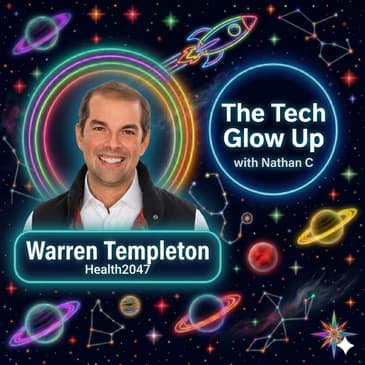

Every health tech founder wants to change the system. But Warren Templeton, Managing Director at Health2047, will tell you that without financial sustainability, the mission dies on the vine. "No mission without margin" isn't a compromise — it's a precondition. In a sector where impact is measured in lives and dollars at the same time, Warren argues that founders who can't do the math on their own business model are the ones who don't make it.
Health2047 is a venture studio backed by the American Medical Association — and that structure matters. Warren and his team don't just write checks. They build business capability around pre-seed and seed founders, then deploy capital through whatever vehicle fits the situation, debt or equity.
The name 2047 is deliberate: the 200-year anniversary of the AMA's founding.
The portfolio spans chronic disease management, data liquidity, and physician productivity, with companies like Phenomix Health, Moneta, ScholarRx, and Zing Health. Warren also wants every Health2047 startup to openly document their data's biases and limitations — because training on non-representative data doesn't fix the problem, it compounds it.
Key Moments:
- [00:03:34] How Health2047 partners with founders — beyond the check
- [00:06:05] The "no mission without margin" thesis and what it really means
- [00:12:16] What healthcare transformation actually looks like (hint: it's not blowing things up)
- [00:24:58] The open data future Warren wants to see — and why it's already starting
- [00:26:37] The women's health investment gap and the Health of Women thesis
Warren's framework for founders is deceptively simple: price times quantity. Healthcare has finite patient populations, limited physician counts, and real unit economics. Knowing your P×Q math tells you what kind of investor you need and whether your business model can actually survive.
Subscribe to The Tech Glow Up for more conversations with the leaders driving healthcare forward.
Watch the full conversation on YouTube → https://youtu.be/NYYc_a2k63w
Join the Tech Glow Up newsletter on Substack → https://substack.com/@mxnathanc
About Warren Templeton:
Warren Templeton is a Managing Director at Health2047, the venture studio backed by the American Medical Association. In this role, Warren works with founders and entrepreneurs on product formation and refinement through to go-to-market execution. Warren brings strong analytical and deep technical skills, possessing significant capabilities in both enterprise and consumer-focused product development. Warren sits on the board of RecoverX, a Health2047 portfolio company.
Previously, Warren co-founded a marketing content creation platform, Zigna, and served as COO. He worked at Fitbit on growth strategies via M&A. Warren began his career building trading technology for Deutsche Bank, JP Morgan, and Morgan Stanley, where he last held the title of VP. Warren holds a BSc in Computer Science and Management from the University of St. Andrews and an MBA from Darden School of Business at University of Virginia.
A "glow up" signifies a positive transformation, reflecting the journey of becoming a better, more successful version of oneself.
At The Tech Glow Up, we humanize the startup and innovation landscape by focusing on the essential aspects of the entrepreneurial journey. Groundbreaking ideas are often ahead of their time, making resilience and perseverance vital for founders and product leaders.
In our podcast, we engage with innovators to discuss their transformative ideas, the challenges they face, and how they create value for future success.
If you're a founder or product leader seeking your own glow up, or a seasoned entrepreneur with stories to share, we invite you to join our guest list via this link.
The Glow Up talks with innovators about their big ideas, how they stay resilient in the face of change and how they find and build the value that will drive their future success.
What is a glow up - you might ask?
Glow up is defined as "a positive transformation, often involving significant changes in appearance, confidence, or lifestyle.
We use "Glow up" to refer to the process of becoming a better version of oneself, more attractive, and more successful.
If you're a founder or a product leader who's looking to have a glow up of your own - or if you're a seasoned entrepreneur who's stories can support others, we'd love to hear from you. Please add you name to the guest list with the link in the show notes.
Each episode will also feature a community spotlight for innovative NGOs, non-proffits, and other organizations that are driving innovation and change in their communities. There's another link in our bio for community groups and sponsors to learn more!
It's a little bit of a disruption even to have this kind of guest on The Tech Glow Up. Hey, it's Nathan from the Tech Glow Up. I've talked to hundreds of leaders in innovation, but my talk with Warren Templeton of Health2047 was pretty special because I got to talk with this venture investor who's focused on making a real impact in health technology. This one stands out for the real actionable advice. That any founder, especially those in the health tech space, can follow. Health2047 is a venture studio backed by the American Medical Association, so you know, they're focused on making an impact. The name Health2047 comes from the 200 year anniversary of the founding of the AMA and speaks to this organization's long-term goals about healthcare in America. It's a real treat to talk with a venture capital investor and program manager to really learn about what they're looking for when they're looking to disrupt health technology. Warren and the team at Health2047 don't stop at easy wins. They're looking to make long-term transformative impact in the industry. You're gonna love Warren's focus on science-based innovation, scalable impact, and the idea that there's no mission without a margin. Any organization that's trying to do good. Also needs funding. And so if your great idea can't sustain itself, is it really the innovation and the disruption that you think it's going to be? Warren and his team help startups and founders build the business sense that supports the kind of transformation that they're trying to make in the industry. They really work with each founder and each startup to build the most mindful, appropriate business plan so that their innovation can make its biggest impact. It's a little bit of a disruption even to have this kind of guest on the tech Glow Up. I hope you enjoy Warren Templeton of Health2047 on The Tech Glow Up. Hello and welcome to the Tech Glow Up. I'm Nathan C, and today it's my distinct pleasure to welcome Warren Templeton of Health2047. He's the managing director there and the person that most people in healthcare innovation are trying to talk to. Warren, I'm so excited to learn from you and your journey in health, innovation and impact. Thanks for joining me on the Tech Glow Up.
Warren TempletonThanks, Nathan. Pleasure to be here.
Nathan CCould you please introduce yourself and the work that you do at Health2047?
Warren TempletonSure. Warren Templeton, managing director at Health2047. Our company is a venture studio backed by the American Medical association, we partner with founders at the pre-seed and seed stage and, walk them through a process normally to build a business capability, AR around them. And then we have a funding vehicle that then invests, in their business, in whatever the appropriate, funding vehicle looks like, debt or equity. Our thesis is really driven by, the a MA, our parent company. of the most important things is a, are you something that's going to transform healthcare? a lot of great point solutions out there. great investible solutions, we're really looking for those transformational opportunities that are gonna change the way that we either experience healthcare from we, there's a quadruple aim, which is about cost, outcomes, et cetera. or is it aligned with one of our key, pillar areas, around, chronic disease management data, data liquidity. And then the last one, being physician productivity, obviously with the a MA being our parent company, hyper-focused on physicians. but what you'll see in our portfolio is actually a mix of opportunities to better inform and or support physicians on their journeys in any one of these key areas.
Nathan CYou've already said a few things that make me really wanna dive in. Just sort of noting, right? this idea of a founding hypothesis, driving the work that you do a as well as like some of the deep dives around data liquidity and like, physician efficiency. These are some of the topics that I hear everywhere. You know, when I'm at an event like VIVE or HIMSS. And, I'm super interested to jump into your perspective as somebody who is both supporting startups. Let's dive into this part. how does Health2047 partner and, push on those business cases oftentimes, I've seen the make or break line, for any innovation is: Is your business model anywhere near as robust as the technology that you've built? And so I'm very curious, how do you help, startup. Both understand where they're at and what that future impact is, and how do you partner with them, on that journey.
Warren TempletonSo first of all, are looking for, science-based innovation or science-based insights. so that is the bedrock of how we think about anything we're, talking or any physician or founder we're talking to. And we don't just work with physician, founder, it's any science-based founder or science. solution. The next is then, yes, is there a business model that scales with that business? The one that where it starts to diverge, maybe from a pure play venture investor is is that revenue model sufficient to support this business long term? Some business models in healthcare look more like J curves, some of look more linear. And so we've got to play with that mix, right? And part of our investment thesis is around, Mission is one way to frame it up. So around transformation are three pillar areas. but the other way to frame it up is that, you can't do, you can't do mission without margin. A lot of nonprofits will talk about this in this context and every one of our startups has to be able to make their own revenue and, and figure out how to support themselves. Some of those returns actually may look different longer term. but we've been surprised with some out outrageous success. And for instance, ScholarRx who are doing a. Great work in education, for health workers across the United States and actually now, in underprivileged parts of the globe, or in our other startup, Zing Health, which started out as an underserved, population targeted, managed Medicare plan and is now since grown into covering a lot of different, you know, Diaspora across the United States. We can do great things with startups who are focused on transformation. and then frankly, we are seeing that those returns are then resulting from those investments. and you know, that can play out many different ways, down the road. One other thing I will highlight is that. We do have some pure, not pure investment, in the sense that yes, we're expecting the returns from it, but frankly, they're still trying to, address disparities of care, or lack of, of access. and we can, I think mission and impact in healthcare is pretty, quote unquote easy if you're thinking of it from those lens.
Nathan CI love that. Warren, one of the reasons I'm very excited to chat with you and even, you know, just listening a few moments here you are. Both fluent and comfortable with some of the hardest parts of this innovator's journey. There's no way you started, managing a fund with a mission and a short timeframe. Can you catch us up a little bit and what was your origin story? What got you interested in this space? And maybe if you can touch on like, when did you pivot into, the investing and guiding.
Warren TempletonAlright, the short one is I did my undergraduate at the University of St. Andrews in Scotland, in, computer science and business, and had a wonderful opportunity to join, investment banking in London. Hence why I've got my british flag over my shoulder, but probably spent 11 years building, high frequency trading systems, accounting platforms, pricing engines, et cetera. I had a, family emergency in, 2013, that precipitated my decision to move back to the United States. did that on the basis of deciding to do my MBA was actually pretty convinced I was going to get into m and a. and so I had a chance to work with Fitbit for, a little while. Really on, innovating their own product line on the product end, on the, sorry, services end. we did, some great work, but I was really gobsmacked by the lack of, technology and the. focus in healthcare at helping patients. And so one of the opportunities I had was Health2047 said, we need somebody who understands product and growth, and healthcare. And I said I got two or three. would you be willing to take me on? And I joined originally as a product manager when we were a pure play venture studio. So pure play venture studios look more research organizations that are trying to spin up businesses outta the back of them. We did that a few times, and it turns out it's really hard to do. So how do we help those founders who are showing promise of. great products, great solutions to industry problems that are transformational. but at the same time, how do we make sure that we're, we're supporting them from an investment point of view? And so we've been doing that for about the last six years, which has spun out about nine active, startups at this moment.
Nathan COne of the things that's really draws me to the Health2047 model is this focus on the difficult problems and the profitable solutions. It's some very high bars and your, pedigree kind of shows like, okay, like solving some really hard problems, familiar with regulation gonna build some things when you need to, and not, not that, not that scared to roll up your sleeves and, get dirty. You've talked about this transformational change and. I feel like one of the places where founders and funders have, trouble getting on the same page is, that balancing of how do we look at the future and how do we look at what is real today? And I feel like. Asking a founder to be both transformational and focused on, the business model today, it, every founder will tell you that their idea is transformational. And I feel like they will also, almost everyone will tell you, if I just had some money, I could prove to you, I could like figure out the business model. So. For those founders who believe that they are transformational how do you, work to get on the same page is maybe the, broad way that I will ask it. but how do you, how do you get on the same page to understand where they are and, to know when's the right time to invest versus when's the right time to mentor and guide further?
Warren Templetontransformation is in the eye of the beholder for many organizations. The way that, I personally think about it, and some of my colleagues may see this differently, is that, Every patient and every physician has to experience the healthcare system as it is today. I don't think we have the option simply blowing things up like some other parts of the industry would suggest, outside of healthcare. it's not to say that we can't change the way we are doing things, but transformation is about how do we have high impact? How do we help multitude of patients or physicians, while also considering the existing workflows. how we embed ourselves in, maybe changing that patient's journey, right? So you think about, so we recently published back in March our Health of Women, thesis, and that was really focused on women are experiencing, care in a variety of different environments. obviously OBGYN, primary care. and increasingly with NPS and PAs. Each, one of those touchpoint is in and of themselves a unique set of challenges. And then if you think about a woman's journey, they've got a whole bunch of life stages as well as disease states that are aligned against those life, moments. And one of the challenges is that transformation is not one solution that may addresses one. item in a woman's journey, right? A peak, a polycystic ovaries. A massive problem for a, a portion of the population. But I don't think that a solution, particularly in digital, 'cause that's really where we play, is going to be, available. and that's frankly the call that I have to any founder is, what I'm interested in is being proven wrong. Because it's the only way I can get it more educated and more intelligent. But I think transformation looks like a variety of different things. That can be things like, taking a patient's journey from soup to nuts and decomposing it into a way that is completely unique. Maybe you've got an original science that's really talking about this cross section between, The, moment of, of diagnosis and the journey that they're about to embark on, right? And so each one of these, startups, we've, we, you know, we've got great, examples. So, Phenomix Health, they're a, obesity phenotyping business. Started out as a Mayo, research topic, which we then partner to, bring into market. and they are doing amazing. Things not only about those who are on GLP1 journeys, but for those who are not GLP1 respondents, this is a, obviously obesity being a problem, but now we're reading about all the other benefits of GLP1s. How do we make sure that people are getting to the right, interventions, this is transformational. How do we make sure that people are getting the most value and getting to not only their, target weight, but also, some of the other healthcare benefits that are associated with, weight loss, et cetera. So I think of transformation, in broad terms. And, when you're trying to build a business, 'cause it really comes down to communication. And for the founder, one of the challenges is you gotta communicate. Sell on the big idea, but figure out how you're gonna get what are those way points along the way. And, Just to put a finer point on it, you often get folks who come to talk to us, who love to talk about how their new product is going to be a platform. A platform only becomes a platform when you solve specific problems. Those problems normally have to be transparent and clear. And as you're telling this larger story, one of the challenges I think for most communicators is then how do you make sure that you're. that those, moments in time. And that can start with the science, but it's actually your execution. How do you think about go to market? How do you think about product development? How do you think about customer support? How do you think about, even basic sales and things like this? And there are amazing resources, whether it's Lenny's Podcasts, other viewer guests who've been on here who can talk about some of those struggles.
Nathan COh, I love that. Thank you so much and, thank you for fielding the, big questions you've got my brain, inspired so. A as somebody whose background is in product marketing and sort of the go to market side of things, I have my preferred ways that I like to learn about product market fit. And some of these markers things that you're looking for from the, teams that you support. I'm curious, do you, from your sort of product hat and your investor hat have favorite ways that you like to either learn about, technologies and innovations that you're working with or. As an alternative that you encourage, the funds that you work with to learn about and really understand their customers and their business models, how do you advise, testing and learning and growing for the kinds of startups you work with?
Warren TempletonLet's start with the basics, right? If you're doing good science, science involves a population, hopefully there's some form of control, et cetera, so you've already got some basic amounts of understanding as to how there's impact, particularly if you're on the clinical side. If you're on more of the administrative side of healthcare. Maybe you have data, maybe you have a proof of concept partner, et cetera, that's helping you drive. Look, I can, I've got outcomes data, like ultimately healthcare is about outcomes data. and that's what the science is trying to drive at. So that's on kind of the, foundation. figuring out how to eat your own dog food is the saying is incredibly important for, not only. Product development, but then also these are the same people who are probably gonna be your purchasers or your users. And healthcare's got an odd, family of friends, which is that your user is not necessarily the person who's paying for the product. And sometimes the utility accrual is equally not in the same. And I, usually form this up in a triangle because the, three things you gotta optimize for all three different corners of the triangle. and I think one of the challenges that a lot of, first time, founders in healthcare struggle with is the notion that a product serve, has to serve so many masters. And figuring out how to have those people at the table while you're designing it is incredibly important. Unfortunately, the technical innovation bar is not that high, and so actually driving great things in utility. Can be actually more impactful than necessarily having the sexiest UI that may exist, et cetera. that extends in a variety of different, platforms. every one of us has used a medical application that we probably were like, I probably have seen some of these design principles 10 years ago and we're still using them today. And it's not a knock on those who are innovating in healthcare far from, it's the fact that The challenge is to deliver such solutions, means that sometimes we have to, skimp on, the last mile, which is the ui. And I don't, and I'm harking on the ui, but this is probably more about the journey that it takes to bring those people to the table, make sure they're getting maximum value, before you're trying to then, polish. the edges. And by the way, that can take a long time. It is a hard business. Healthcare is extra hard 'cause you've got regulation, you've got blockers to accessing, purchasers, decision makers, et cetera. And now you've got a, a set of, requirements when you do sell to meet. Things like we talk about SOC two and hipaa, but there's actually a whole bunch of, business operating, principles that are I important around, access controls, things like, malpractice insurance, et cetera, or mal or coverage for indemnity of liability in the event you're part of a malpractice suit. There's all these other complexities of healthcare that, extend far beyond just the kind of the rote, can I build it, can I get customers to get involved in it?
Nathan CTalking with folks in healthcare about like complexity, bringing on stakeholders timelines. It is kind of like talking to, Europeans about like marketing and privacy. it's something that's kind of already in your DNA and To your point, right. Silicon Valley innovators have, more to learn in some of these areas that you're describing around like the science of, what true transformation is. I, so love it. Warren, I, I feel like we might be a little remiss if I like, keep going through the, the thread of sort of innovation questions on The Tech Glow Up without asking a little bit deeper about the mission for Health2047 specifically. Can you talk a little bit about, the impact side of, of what you're doing?
Warren TempletonSo Health 24 seven's mission is really around impact, of, transformational opportunities within healthcare. It's echoed by the American Medical Association's focus on, physician health and some public health. and I think the important thing maybe to take away on what we're doing is that can look like a, lot of different things. We're expecting a, founding team to have a broad goal and, around, impact to public health, physician health, et cetera. And then the flip side of that is then, okay, how are you gonna grow that? And so we mentioned no margin without mission." It's important for any one of our startups to figure these kinds of things out. Now, one of the things that, probably is different is that that growth story starts to look a little bit different, from a point of view that, does philanthropic dollars make sense for your business? We can still invest in a startup that may look. it may need more philanthropic dollars. It may be that, you probably need to figure out, how to get to revenue break even sooner so that you have sustainable growth. And so that any, venture style investing starts to look more project. expansion, right? So I've got product one. We're in market, we're doing well. Product two, we need more funding to launch that one. but it's accretive to our product one customers or something like this. That's where you start to look. It looks a little bit different actually, frankly more debt financing and some other things that you have might have access to. Obviously want returns on our portfolio, but we are also keen that whatever we're doing is helping, the population get to a better place in their health journey. And that can look like anything in, chronic disease management, physician productivity, which is an omnibus for, administrative tasks Number one, reason for physicians leaving the practice, cited was, pajama time, the associated time, with, doing EHR encoding at the end of their, working day. Ambient listeners are changing that story. and so now those, some of those barriers to the, joy of medicine or are falling, down. Although, you know, there's a lot of, frankly, challenges within the, some of the automated encoding there. There's a both an access, so not every physician has access to it. but then equally there's still the review process and the, level of specificity that may be required. And I know we've spoken to some users who love it, what's going on, others who are still struggling with the output. But as we think about, physician productivity, this does not just look like, in fact, I would say that I'm less interested in just a pure, financial coding easy eeg, an RCM platform. I'd be more interested in some of the adminis other 25% of healthcare costs that are associated with, administrative burden within. Within the practice of medicine. and so, you know, we can break that down, what that looks like. chronic disease, look, whether you're a, woman, a male, you've got obesity, you've got diabetes, there are so many big problems within healthcare and, too many patients are falling through the cracks. and so our hope is that we're finding partners and, startups that are trying to decompose some of these challenges, right? And they look. in nature. they, we need partners who are willing to part with data. you know, one of the amazing things that we've now seen, systems doing is, you know, Mayo Cleveland Clinic, UPMC, through their AHA program. Have actually released, de-identified data. And so for a, for certain, access, you may take, they may take an equities position or there may be a cost associated with it, but they're making it possible for startups to advance their own stories, in a more meaningful way. I'm excited to find more of these solutions that are exist in market. the UK NHS has long, had a, you know, did A data platform for it as well. and I'm hoping that we'll find more because we can only get better as a system if we can do better research. Or frankly, the other side of it is that you can make it possible for a small system who otherwise would not get the attention of a sales organization, to be able to run a quick business development assessment and say, oh, actually they do have enough people in this location, for me to justify spending the time and effort to try to deploy my product or get get these. these are use utilities of having public data sets or accessible data sets.
Nathan COh my gosh, Warren, I think you extended this interview by about an hour by bringing in this key idea. I've, I've been all in, you know, for the last two or three years. Like one of the big changes that I've seen in digital health is how. The, especially with the event of ai, right. Pharmacy has come to understand that like their data is unique within the care chain and that it is a value for them to, you know, share back into the world. Med management similar things, right? There's all of these inputs and I love how you called out so early, right? Like that a lot of these early founders have a data set and like a diagnosis kind of equation. I have long seen that like your data is your differentiator, but I love how you're coming to understand this idea of open data, of shared data as almost like, a new kind of baseline of metadata that allows organizations to collaborate, to understand, to work on problems together in kind of like. A proactive, anonymized sort of way. it's really pushing my idea of how, it's like API for business information. It's, it, some really cool, things you're touching on there.
Warren Templetonbe clear, there's an exchange of value that
Nathan Cyeah.
Warren Templetonbut it's a recognition. Yeah.
Nathan Cjust, I think opening up. The walled gardens a little bit so that we can, start to share the endpoints, and receptors that we're looking for is, is a nice maturation of that understanding of data, I think is where my brain was going. Warren, as somebody has such a. A perspective, and an opinion about the direction of healthcare. I'm, curious if you can share what is the Glow Up that you wanna see happen in healthcare in the next year? I know, you have your eyes set on 2047, but in 2026 what's the major, innovation, rebirth, transformation that you're looking to see in the industry this Year?
Warren TempletonWe've talked a lot about, science, right? And so whatever the mechanisms are, to make sure that we are doing good science, right? We've had some changes in funding strategies, et cetera, that are. Look, it's the foundation of how we invest, but actually it's the foundation of how we advance healthcare. And so whether that's, NIH grants and funding universities figuring out new ways to support innovation, health systems doing the same, that is my hope. And I would love to see more, fidelity on data, bias and data content. And what I mean by that is. We'd work with a lot of great founders, but if you are not clear on where there's bias or gaps in data, it tells us two things. Number one is that you don't understand your data as well as maybe you should. But then the other side of that is that, the implication to your customer is, potentially. problematic, right? So if you've only trained on, admin act actions in a, rural setting, now you're trying to apply it to a large hospital setting, those don't ha those don't work well. if you've only got data, you know, research in, academic medical system, then it is gonna be biased in a way that does not look like the, maybe the population you're trying to serve. And there's a concept called, the Habsburg paradox, which is that, you know, after the Habsburg monarchy incestuous behavior, but if you keep doing data transformation and data learning on content that is not, not consistent or with, addressing bias, then that's a, that is a problem.
Nathan CThank you for that, that how would, if we brought it like a step closer to home, how would you characterize the Glow Up that you're working on, either for your portfolio or for the, impact and work that you're doing at Health2047.
Warren TempletonSmall background on 2047. It's 200 years from the founding of the American Medical Association. So first of all, you know, on this data, data bias, data, transparency. The first thing is that we're excited that every one of our startups has, content around what its data looks like and how it's helping them, drive at, their goals, right? Monetta who are doing some amazing things in, dementia care for women, and then Hopper who have recognized that their technology, are doing some. Amazing things with dense breast tissue. this is a major challenge for, for women who have that as part of their mammography and getting great reads. And each one of these platforms have been able to not only address the bias, but then turn that into a strength. And as more startups start to have that understanding, that's gonna be an amazing super weapon for, serving populations who either otherwise have not been able to get access or if everybody's. Is able to access the academic medical center's data. What is your unique kind of content that allows you to serve more of the population or better? The other one that I would love to be able to kind of, talk about, at the end of this year is that we backed a startup that was, women's health first. Women, are affected by diseases differently. disproportionately and uniquely. and so one of the challenges for many startups is that, I think there's a most found, or sorry, most investors think of, of business cases in terms of p times Q price, times quantity. And that creates a value that creates a lot of other, metrics. Women's health, alone has some of the same size quantity targets as things like cancer, as things like, obesity. Yet we are struggling with, I think, some of the value equation. And I don't know if that's because we don't have enough science or because we're seeing a lot of great, innovators who are struggling with access to funding, et cetera. and you know, this is a story that, plays out un unfortunately for many, disproportionate communities, of which even, you know, rural health, which is another area I'm, increasingly interested in and want to kind of. Spend some time working on later this year is how do we start to tell, draw this thread between these underserved populations and also how do we make sure that we're creating opportunities for, investment. I'm not saying I have all the answers. In fact, the best part of my job is that I get to talk to people who do have, hopefully creative and new, answers to these problems. and not all funding vehicles look the same. and one of the strengths that Health2047 has is that all of our startups will have a unique funding process. It is not just a pure, you know, venture story. and that can look like a lot of different amazing things. and so I would love to close the year out with another. health of women investment or rural health Investment. but equally there's a, lot of new things I'm gonna learn along the way and, life could look very different by the end of the year.
Nathan CFantastic.
Warren TempletonOkay.
Nathan CThank you Warren. I knew that this conversation would be great for innovators to hear, and I see and really appreciate how you treat, your portfolio, on sort of on that one-to-one basis. it really shows that you're focused, on the impact and on their journey. I think we have to take it to the speed round 'cause we're, we're at that point in the conversation. are you ready for some, fast and furious questions?
Warren TempletonSure.
Nathan Cif there was one takeaway that you'd like our listeners, to walk away from this conversation, today with, in one or two sentences, what would that be?
Warren Templetonbe clear about what your price times quantity is, because that's gonna drive the type of investor that you may need to pursue Get really narrow on your communications. It's, these are really big concepts in healthcare. How do you make it so that you're communicating effectively at both the term execution and the broad impact that you and your startup can make?
Nathan CWarren, I am a nerd about strategic planning. It's, the end of, it's like the very end of Q1. It's basically at the beginning of Q2. when we're talking today which, quarter is your head in? currently your strategic planning bring in.
Warren TempletonI'm probably already thinking about next year, frankly. But it's all the execution that we agreed to at the end of last year that we're now in the middle of. Any founder will tell you how hard it is to have those dual roles, right? Which is vision as well as execute execution. And that's, this balancing between vision execution is e it's i, have to do the same thing every day.
Nathan Cdo you have a spicy soundbite to share? maybe a hot take on technology, AI culture beyond.
Warren TempletonAI is a great tool, but it is not a panacea and we are treating it at times like it is a panacea there. And look, there's some great stuff that it's going to do and is, having an impact in healthcare. But I think we are still at the early stages of figuring this out. We had the notion of grid computing back in the late nineties. Actually, if you go back and research 1970s, it only became relevant when cloud computing was what everybody was building Azure, et cetera. Are we at the same or similar moment? 'cause we're not, we're modifying existing workflows. Are we really changing the way that business works? And healthcare being a laggard of investment probably is one of those areas where, there's probably going to be a couple of waves of, change and transformation. But I, it's a kind of a semis spicy take because I don't think, I think there, there are certainly folks who would say that it's gonna replace physicians. I don't personally believe that, and I don't think. Anybody in our organization believes that way, but I do believe that there are, over commitments or over promises that are occurring. and frankly, the other area that we are hearing from, health systems is the overwhelming cost of working with product focused businesses, that to build solutions in this space where they're not getting the returns. That they may have been hoping for. And if I've gotta choose between a nursing contract or 10 agents, it may be that as a health administrator, I'm having to choose that nursing contract because those nurses can do multiple different things, particularly if the ROI is not sufficient. And so I think that's a challenge that every startup has to have. And we've got this going back to the P times Q issue, which is that there's a price that has to be reached or to hit that value because there's a finite number of quantities within healthcare. and and they're not normally that large, right? 800,000 physicians, 4 million nurses a million cancer patients, 120,000 obesity patients in the country these are different numbers from, and the prices that we're willing to pay for each one of those things can be different. And so I think the challenge is that if we are going after small quantity values and we're jacking up those. Price values that's where we're seeing some of this challenge within adoption and healthcare at times. but then we're all complaining about the expanding footprint of the cost of healthcare, right? We're almost at 20% of GDP growing at 8%, five to 8% a year. That's not sustainable. And some of this pricing stuff is gonna be driving some of those changes. So there's a macroeconomic challenge that this introduces, but it comes to all the way down to how do we thinking about. cost effective transformation within healthcare, and how is there adoption that's meaningful? at the point of whether that's a workflow, a clinical activity, et cetera. I.
Nathan CWarren Templeton. Managing director at Health2047. It has been such a pleasure and a masterclass, to talk about health tech innovation with you. I love this model of, impact and revenue as the mark for success, as we're looking at transforming the health, system and health tech in general. There could not be more simple, straightforward advice, than to really understand your BS and Qs and the model that you are building, and use that to understand, are you delivering the impact at the right price, that you, that you're setting out to do. This wonderful summary and, just fantastic advice that you shared with us. this has been such a treat and I hope anybody who's trying to break their way into health tech innovation, the operational side, health, ai, listens all the way through. You know, I'd be remiss to, end the show. And I'm gonna put this up at the top before this meaningful, what's the best way that people can follow up and learn more about the work that you're doing?
Warren TempletonLinkedIn is my, kind of bread and butter. So find me on LinkedIn, Warren Templeton. and then if you are working in innovation or have a startup that is creative, and you think you wanna get involved in our portfolio. we have an application on our website, health 24 seven.com/apply. please, kind of have a look there and, look, we're always looking for, startups. I'd rather speak to more founders than fewer. So if you think you've got something and maybe we get just a little bit of advice, let's have that conversation as much as, if you think you're gonna get to some capital. You know, we invest in two to three startups a year, so we are very. high conviction, narrow focus, but love to talk to founders. It's the only way I can do my job better.
Nathan CMy goodness. Warren Templeton, thank you so much for joining me on the Tech Glow Up. This was really a fantastic conversation.
Warren TempletonThanks Nathan.
Nathan CCan I ask you a favor? If you really enjoyed this episode, could you share it on your Instagram stories or maybe post the link with what you enjoyed on LinkedIn? The sort of sharing and engaging really helps small podcasters like me reach the audience that I know really cares about these kinds of conversations. If you've made it this far in the podcast, I really appreciate you. Thanks for listening. Please make sure to like and subscribe so that you never miss an episode of the Tech Glow Up. And hey, can I ask you a favor? If you really enjoyed this episode, could you share it on your Instagram stories or maybe post the link with what you enjoyed on LinkedIn? The sort of sharing and engaging really helps small podcasters like me reach the audience that I know really cares about these kinds of conversations.