

The reality of health equity starts not in a clinic but in the community, addressing fundamental needs like housing, food, and transportation that doctors and nurses can't solve. These critical factors, known as Social Determinants of Health (SDOH), are the true barriers to living healthier and happier lives.
But who is on the ground, doing the vital work of connecting people with these resources and building the necessary trust? Community Health Workers (CHWs)—trusted community members with invaluable lived experience—have been the hidden backbone of this effort, often operating with just paper and spreadsheets.
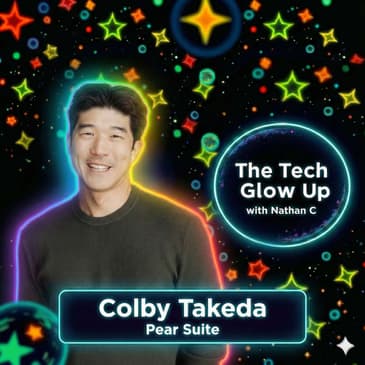
Founder Colby Takeda of Pear Suite is on The Tech Glow Up to talk about the technology he built to incorporate these local experts into the official healthcare system and, most critically, finally get them paid. This episode is a deep dive into how Pear Suite, a 2026 HLTH Foundation Techquity Award winner, is driving value-based care in local communities.
Pear Suite’s philosophy is elegantly simple: healthcare should be done in the community, and those with the most relevant experience must be empowered to lead. Takeda explains that their solution not only uplifts the CHWs’ work by providing a practice management software to organize their efforts but also allows them to handle the compliance, billing, and claims that are essential to unlocking reimbursement opportunities and value-based care contracts.
Episode Highlights
- Social Determinants of Health Focus: The platform helps local workers address critical factors like housing, transportation, and food security that doctors and nurses are unable to directly assist with.
- Value-Based Care Success: A partnership with Health Net in California saw over 800 CHWs onboarded in 12 months, leading to reduced ER admissions and increased vaccinations and cancer screenings for over a million members.
- Enhancing the Workforce with AI: Pear Suite is actively working to integrate AI not to replace the essential human element of CHWs but to enhance their capacity, reduce mistakes, and save them time.
- The Power of Lived Experience: Takeda built the company on the principle that the lived experience CHWs bring to the table "can't be bought or taught," making them the most qualified navigators for hard-hit communities.
Takeda's compelling approach is a masterclass in building a successful and equitable business model: act as the intermediary that translates the on-the-ground successes of nonprofits into the language of health plans (metrics and cost savings), ensuring the community's work is both valued and financially compensated.
By starting from the community and building trust, Pear Suite is proving that investing in this workforce is an investment in the health outcomes and long-term sustainability of the entire system.
Watch the full video on YouTube, and please like and subscribe to The Tech Glow Up!
A "glow up" signifies a positive transformation, reflecting the journey of becoming a better, more successful version of oneself.
At The Tech Glow Up, we humanize the startup and innovation landscape by focusing on the essential aspects of the entrepreneurial journey. Groundbreaking ideas are often ahead of their time, making resilience and perseverance vital for founders and product leaders.
In our podcast, we engage with innovators to discuss their transformative ideas, the challenges they face, and how they create value for future success.
If you're a founder or product leader seeking your own glow up, or a seasoned entrepreneur with stories to share, we invite you to join our guest list via this link.
The Glow Up talks with innovators about their big ideas, how they stay resilient in the face of change and how they find and build the value that will drive their future success.
What is a glow up - you might ask?
Glow up is defined as "a positive transformation, often involving significant changes in appearance, confidence, or lifestyle.
We use "Glow up" to refer to the process of becoming a better version of oneself, more attractive, and more successful.
If you're a founder or a product leader who's looking to have a glow up of your own - or if you're a seasoned entrepreneur who's stories can support others, we'd love to hear from you. Please add you name to the guest list with the link in the show notes.
Each episode will also feature a community spotlight for innovative NGOs, non-proffits, and other organizations that are driving innovation and change in their communities. There's another link in our bio for community groups and sponsors to learn more!
Welcome to the Tech Glow Up. This is our special tech equity series, partnering with the Health Foundation to feature their three winners of the recent HLTH Techquity Impact case study awards that were just announced and celebrated at the Vive event, 2026 in Los Angeles, California. Techquity means bringing doctors and patients and parents to a seat at the table when we're talking about what sort of technology and advancements, what sort of Glow Up we need to see in the world of healthcare. Who are the health? Foundation Equity Award winners? Pear Suite empowers community health workers with a platform that not only helps them organize the work that they do, but also helps them be compensated for the real health work that they do that is driving value-based care in local communities and making a difference. I'm so excited to welcome you to this special health equity edition of the Tech Glow Up.
Colby TakedaHealthcare should be done in the community. We're all about empowering Community health workers and these are people that have lived experience. Who are your neighbors, who are people that go to your church, who you'll see at the grocery store, the possibility for us to empower health workers who are on the ground people that understand your experiences, who can guide you through your life's challenges. help you live healthier and happier is amazing. And I think that's what we're all about at Pear Suite.
Nathan C (2)Yeah, I'm excited to get into that. So hello and welcome to the Tech Glow Up. I'm Nathan C, and today I'm talking with Colby Takeda of Pear Suite. This is another of our HLTH Foundation Techquity Award winners series. Colby, thank you so much for joining me today.
Colby TakedaThanks for having me.
Nathan C (2)I am so excited to dive into this premise that you just set up. Could you please introduce yourself and a little bit about the work that you're doing at Pear Suite to help make care more active and available in the.
Colby TakedaAbsolutely. I was born and raised in Hawaii which isn't where you expect a healthcare startup to but it was really the perfect place to start this work. In Hawaii it's all about family community, you see your neighbors, everyone knows each other. The degrees of separation is really unique in that everyone seems to know everyone on the island, even though it's a pretty big island over about a million people on Oahu at least. But yeah, this is a place where everyone cares for each other. Whether you are a local a tourist or part of the military everyone supports each other that model of community health that leverages your lived experiences, your resources, your connections is really something that can thrive. During the COVID-19 pandemic this is the innovation we started. We, the idea that we can take people that at your church who maybe you meet in the community at library people that you see at the YMCA they can guide and help you. as well and they should be part of the healthcare system. This is how we're increasing access. At the time I was teaching Community Health Worker courses and despite not thinking I'd be a tech founder realizing that a lot of community health workers didn't have software, they were on paper and spreadsheets and in this day and age that shouldn't be a thing we should be able to work faster and better and be more effective with technology and to be able to build alongside these community health workers was really special. Yeah, certainly my public health background helped with that. Studied the, concepts and theories of public health, but this is my chance to combine that with the innovative spirit and the entrepreneurial spirit and make a company and solution that really can solve for some really big issues in the healthcare system.
Nathan C (2)Can you talk a little bit more specifically about how you're using technology to drive this kind of access and. I'm actually really drawn to this idea of including the community and like a bringing in of resources. what is your specific approach with Pear Suite to use technology and to engage the knowledge of the community toward these community health goals?
Colby TakedaAbsolutely. It's been amazing to see a shift in the healthcare thinking around what actually impacts that right. Before certainly your genetics, your background, your absence to healthcare. Do you have a doctor? Do you not have a doctor? That was really important and still are. But now everyone recognizes that housing. Do you have a roof over your head? Do you have transportation to, your workplace? Do you even have a job to begin with? Do you have tech literacy to help you fill out an online application to get the job in the first place? Do you have food? Can you feed your family with not just any food, but healthy and fresh food? All of these factors are so critical and it's not your doctor that's gonna help with these things, right? It's not a nurse that's gonna help you find affordable, reliable housing. It's the people on the ground who are your neighbors, nonprofit who are on the ground helping you navigate the healthcare system by getting you connected to a doctor in the first place, or maybe doing translation or interpretation for you helping you find housing that is affordable and is reliable and safe. People live in, in, in apartments or houses, but maybe there's utility challenges or maybe there's challenges with electricity or there's trip hazards. These are all factors that we need to uplift and promote as critical to living a healthy, independent lifestyle. Community health workers and community based organizations are at the core of this work, and they've been doing so for decades. It's not a new thing, but they've never been incorporated into the healthcare system, and that really prevented them from activating and, doing their critical work during the pandemic and this is the time when trust was so critical and who's best to. Have that trusted relationship with the hardest hit communities It's our community based organizations. Pear Suite really uses technology to uplift the work and, experiences that these community health workers and community based organizations bring. And allowing them to share data with health plans and health systems to generate referrals and, close the loop on different challenges. If somebody has a challenge, let's not just send the flyer or direct'em to a nonprofit. Let's actually make sure they get the support they need from these organizations. Now we actually can help these organizations get paid for this work and valued for this work. That billing that claims the compliance of working in healthcare, all that was critical for these organizations and Pear Suite solves all that with our technology.
Nathan C (2)One of my personal frustrations, especially if there's a referral or if there's some additional resource that either in my care or people I'm supporting in their care journey, like need, usually like I get a piece of paper with 10 options. Three of them aren't options anymore, and two or three are circled that's the extent of the handoff. I'm imagining as you're talking. Somebody who is out in the community has a need that's been identified and instead of handing them that piece of paper, you schedule an appointment with a provider or make that referral there's some sharing of information and now this person is like gonna get a follow up call rather than five numbers. They have to call and wait on hold Is that, am I imagining
Colby TakedaYeah,
Nathan C (2)direction?
Colby TakedaThe reality is there's not gonna be a perfect resource for everyone, right? Everyone's gonna have different needs and interests. might be some language challenges or cultural challenges or location someone might be able to drive across the state or island to get to a resource. But sometimes if transportation's the challenge, you have to find something near and, maybe even virtual, right? So that's what CHWs and community-based organizations do well and say. They understand Understand the needs and interests, the specific goals of that individual or family. They build that trust, which is so critical because if there are hurdles that individual member or family will go back to that CHW and get ongoing assistance or additional support, and that's what's amazing about community-based organizations. They don't just assess your needs and refer you. If you need help filling out a form to get into a program or service, like a diabetes prevention program or to get assistance with a special disease, they'll actually help you fill out that form and get you to be successfully using that program or service for the long term and check in with you all on the way.
Nathan C (2)It seems like I love the elegance of this model, right? You're engaging the problem space with the resources already in place at moments when people would typically fall off. That pairing is super elegant from, this perspective. Colby, I'm always curious you even mentioned in your introduction that you, didn't always expect to be a health innovator. What was the moment that beyond the work that you were doing, you saw this opportunity not just to, build a tech solution, but one focused on access what was the moment that made you feel like you had to take this path of an innovator?
Colby TakedaThanks for that. My background is in public health, and I think public health does amazing things, but they don't teach you how to build a business, You don't learn about financial statements and funding models in public health school. my background running an organization in healthcare helped with that. If we really get to solve the world's biggest problems in the healthcare system, you have to understand. How you fund things, right? Where the money flows, what policy implications that are out there how to build a team and organize efforts and how to take some of the biggest challenges and solve for them at scale. what technology allows you to do. And I couldn't do it alone, of course. I was able to find. Along this journey, a amazing co-founder who brought the technology, the infrastructure, the design, the product expertise that I didn't have. I can help fund it. I can get some money and rally the team, but without that partner to build something that will make this solution scale across different communities, different people have different backgrounds users that have disabilities or challenges. That really is what we're doing. We're building technology for some of the most unique individuals out there who have different experiences, but that's what's so beautiful about CHWs, is that they bring that lived experience. They have their experiences being homeless. Being incarcerated being from. situation where they had no one else to support them in times of need they were able to get help. we give them the tools to make them more empowered and resourced so they can, go out there and help other people around them. That's really what we're all about at Pear Suite is empowering those who never before had a voice to help those around them. We are now training students in high school to be community health workers. We're training people in the prison system to become community health workers and upon reentering society can become a community health worker and help those around them. It's amazing to see who we can train as community health workers and then deploy and get paid and find a job. That's really to us what Techquity means is technology that makes it equitable for anyone to do this work, help those in need to get paid for their work and valued in society. It's pretty special.
Nathan C (2)Can you talk a little bit about the mechanism for getting community health workers paid for their contribution? I've heard a couple products talking around this space and it seemed like maybe there's been some updates in legislation or rules about care. But I haven't learned about it yet.
Colby TakedaYeah it's been amazing over the past decade. Lots of policy coming out to support the community health workforce it starts with who are these people, right? How do you describe a community health worker? What's their background? What credential do they have that might make them suitable to provide this care? how can health plans and health systems verify that someone from this space has the skills and expertise they need to help someone and do so in a way that's managing risk, right?'cause everyone in healthcare is a little risk averse. And so really we're seeing, challenges with who is individual bar, where do you find them? How do you get them to the place where they can start working in the healthcare system? And that, of course, takes policy change that has taken a need for technology. Adjusting contrasts can you imagine a, healthcare system working with a nonprofit that you know works out of mobile vans or at libraries, and this is such a new thing, but policy description help with this. Being able to recognize different training. Experiences that these individuals have that was part of the credentialing process. Finding a mechanism to pay them has been recent and, sometimes with Medicaid, it's state by state, so we're seeing different legislative changes or state plan amendments. That's happening state by state. it's also great to see the advocacy shout out to all the community health workers out there who are talking to the legislators and trying to find equitable ways to pay and compensate and value the time and effort and the experiences of CHWs. That has led to this reimbursement opportunity that has then opening up doors for value-based care. The fact that nonprofits now are, working with us to Fulfill value-based care contracts to really value the efforts and outcomes of their work to reduce costs in the healthcare system is truly amazing. So yeah, of course a lot of challenges along the way. We can't just give great technology to community health workers and all of a sudden they start thriving. We realize that we have to lift them up with technology. With education, with handholding, with training, with wraparound support. And so we all provide all of that now. We provide the contracting assistance, the credentialing compliance support. We make sure they're doing things well. We provide them the clinical reviews and support with provider groups, making all the connections possible so they can thrive and succeed. That's why we have such a good. rate of our organization that we work with 98%, which is amazing, some people may not be able to make it, but everyone else we can find a way to solve their problems, get to the place where they need to be successful and help them thrive.
Nathan C (2)Oh, I love it. So the HLTH Foundation's Techquity Awards aren't just awards for good ideas, but They're reviewed case studies. That are looking at actual impact of this tech innovation to drive Techquity. So you started to allude to some of your success metrics. can you talk about some of the, award-winning stats that you've, shared in, the competition?
Colby TakedaYeah, absolutely. And, we're really thankful. We had a, great leader and partner in Health Net in California. The health net team in California believed that if we just give technology and supported community-based organizations with a solution like Pear Suite, could we empower them? Could we help them thrive? Could we help? All of our members at scale through technology and community-based organization, and they said yes. they said, let's give it a try at least. So they partnered with us and we said, let's find these nonprofits. We find these organizations on the ground, and can we give them support with technology and the team at Pear Suite to train them to support them with compliance, to help them get contracts Help them submit claims at scale and then tie this back into the healthcare system. And they said yes, and we're able to onboard over 800 community health workers in the matter of 12 months to then provide support for their million plus members. You think about it during this time the LA fires broke. We had a team of 70 CHWs who are just in the areas affected by this disaster to then step up and say, I wanna help my neighbors. I wanna help my friends. I wanna help those who are impacted. And we were on the ground in these communities making phone calls to check in on people, to provide them care, to help them navigate resources. CHWs are not willing to back down and take vacations. They're gonna be there for you every step of the way. And that investment that Health Net made in us and in the community has paid off dividends. We are just helping this workforce be great navigators, but we're actually seeing great health outcomes as well. So we're seeing increased access to healthcare through seeing a primary care provider. We're seeing increased vaccinations and screenings for cancer. We're seeing reduced EE admissions because of community health workers and the relationship you're building. And so all of this is leading to a change that we can see in the healthcare system if we just invest in the community, invest in technology to empower them.
Nathan C (2)There's this interesting trend in your community based approach, right? Which is this idea that one stat will not fit. one metric will not mean success for every community. often that level of complexity is considered a blocker but you ran right toward it. So when one metric doesn't fit every community health org. Every state, every city, Every island. It's really hard as an innovator to tell that global compelling story of value, right? Like when you're in a growth stage or in an early startup stage that, one compelling message that you can share. Everywhere that everybody just understands and gets is crucial to establishing yourself. But you've taken this approach of starting from the community. Everything is so individualized, so community oriented, which I think is fantastic, but it's also incredibly complex. How do you approach that messaging and the business side of this very community focused approach.
Colby TakedaIt's been amazing to work with both sides of our business model, right? We have on one side nonprofits giving out food and, clothing to families in need, who are working in public housing, who are talking about their day-to-day challenges. And then we're talking about health plans on the other side, metrics care gap closures and cost savings. these two groups do not speak the same language. They're in such different playing fields, and yet they have to in this, model, right? So how do we help community-based organizations tell their story? To health plans and show the value of what they're doing on the ground, By building relationships, what does that mean for cost savings for the health plan? How does it keep the member engaged in their healthcare? That's what our challenge was, how do we become that intermediary? How do we translate? how do we highlight the successes of our community health workers and really show that they're bringing huge value to healthcare system and they should be paid. That's our whole goal. one of our, strengths as a company has been our willingness to be on the ground alongside CHW even learned from them. Be, before we started Pear Suite actually was a, CHW instructor and I, it, this was the time when anyone was I think uplifted to become a CHW instructor if, they're wanting to take a job. And I was, it was a part-time thing for me and, I learned so much from my students more so than I can even teach them, even though I was the one in the position as an instructor. They were just amazing. their lived experience, their ability to do this every single day and teach each other and teach me has been really special. Along this journey, I my experience as a nonprofit leader me the exposure to on the ground workers to learn from them that helped us build software that was really suited for them. tech companies working with hospital systems. aren't built for community-based organizations. They aren't gonna walk you through the step-by-step process to onboard create an account or log into the internet. Using terminology that doesn't align with nonprofits on the ground. we were able to find amazing CHWs who taught us so much, gave us so much feedback Our software to really be forced by CHWs our willingness to stand on the ground with them and learn from them. Who would've thought I'd be walking the streets of Compton or areas that I didn't normally be in and learn from these workers and, show me the, challenges they face every single day? That really built our company up to be what it is today. That, on the ground empathy there was once CHW I quote him, I love his quote. He said that education is great, but lived experience can't be bought or taught, right? You can't pay for the type of experiences that these individuals have. And that's what we're highlighting at Pear Suite.
Nathan C (2)I love how your answer. was like Nathan, I came at the problem, like a whole different, I love the way that this is so endemic to how you see care. Bravo the name of the show is the Tech Glow Up. a Glow Up is a notable transformation or even a rebirth. I use it to talk about six month goals. With a stellar start and so many great collaborations and partners, and now a HLTH Foundation Techquity award under your belt, what is the six month Glow Up that you're working on for Pear Suite?
Colby TakedaYeah, we've thrived in a few states and our six month is to take this nationally. We are now in about 30 states, and so we're moving really fast. The reality is there's CHWs everywhere, urban, rural frontier communities. Every population that is often left out need to be served. We have our first two groups from the blind and deaf community becoming siege studies with us. I think about how do you build software for the blind and deaf community? This is such a different concept, but with some partners, we're making this accessible. Our ability to scale this with large multimillion person or member organizations that have to be able to serve them at scale. That's a whole nother concept or challenge that we're facing now. And we're excited to. Faces head on and some of the new policy coming out has new requirements and we're adapting our system for that. I think one of our biggest glows right now is how do we use AI not to replace workers, but to enhance them. I, always tell this is no customer or nonprofits ever ask me if our software uses ai. is not on their mind. Obviously if I, we actually said AI was part of our software, they'd probably be scared of it. They'd probably run away and, not want this uncertainty to the table. But when we talk about how we leveraging AI to save them time, to help them make more money, to reduce the mistakes, to increase quality care for the patient they serve, then they're like yes, we want this, We recently launched a community health worker council that is helping us guide our product design. We're paying them, we're honoring their valuable time. We're helping to build a product that really is with them and alongside them. We've always had this concept, but now we're actually valuing that and making sure they're at the table and deciding what the future of this workforce looks like. What's interesting is there's companies out there that are just doing I and really looking to replace the community health worker and, we see this as a, threat to them. we really believe in our model that we can work alongside and empower and uplift workers and really solve the biggest challenges at scale alongside them.
Nathan C (2)I love it. You mentioned about four Glow Up, and I think if you do any of'em in the next six months. you're gonna be crushing it. Colby, it has been such a pleasure to chat with you. I'm having to reorient my very tech forward approach to innovation to meet the strategy and model you have developed. you mentioned at the top that you might not expect health tech innovation coming from the island of Oahu, but your understanding of community health, How each community is so different and how that is important and valuable. The whole idea that Pear Suite might be this tool that not only helps connect community health workers with the rest of the healthcare system that they're absolutely impacting, but that you are giving them the business education and tools. To be more successful and to be compensated maybe for the first time, for the very important work that they're doing. So incredibly inspiring. Such a treat to talk with you today. Congrats on the HLTH Foundation Techquity Award. If listeners out there want to follow up or learn more about the work that you're doing at Pear Suite how can people learn more?
Colby TakedaYeah. We're super accessible. I'm on LinkedIn. Reach out to me colby@Pearsuite.com. We do work with the community. We have to be able to meet people where they're at, so I'm always willing to talk to people. partnerships matter, so we're always open to, seeing how we can work together and build a more equitable society for all and empower those who are doing the hard work.
Nathan C (2)Oh my goodness. I always love it when I am challenged to think more about the things that I claim are my own values Person first, community first. Support for the people who are really working, where the people and the problem are. It's just got me lit up. Thank you so much for joining me on the Tech Glow Up.
Colby TakedaIt's been a pleasure.
Nathan CAnd hey, can I ask you a favor? If you really enjoyed this episode, could you share it on your Instagram stories or maybe post the link with what you enjoyed on LinkedIn? The sort of sharing and engaging really helps small podcasters like me reach the audience that I know really cares about these kinds of conversations. If you've made it this far in the podcast, I really appreciate you. Thanks for listening. Please make sure to like and subscribe so that you never miss an episode of the Tech Glow Up. And hey, can I ask you a favor? If you really enjoyed this episode, could you share it on your Instagram stories or maybe post the link with what you enjoyed on LinkedIn? The sort of sharing and engaging really helps small podcasters like me reach the audience that I know really cares about these kinds of conversations.