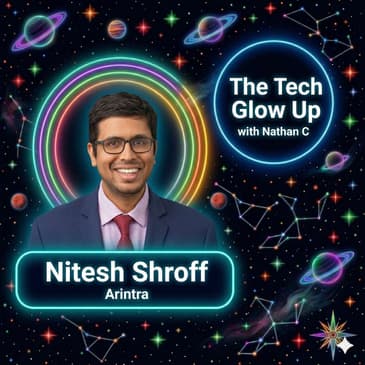
The revenue cycle is one of healthcare's most expensive blind spots. Health systems pour everything into clinical excellence and then leave money on the table through billing leakage, under-coded claims, denied authorizations, and documentation gaps that erode reimbursement for genuinely complex care. Nitesh Shroff, co-founder and CEO of Arintra, has spent five years building the AI infrastructure to close that gap.
Nitesh came to healthcare from an unexpected place. He was an early AI engineer at Zoox, the autonomous vehicle company now owned by Amazon, where the work was perception models, real-time object detection, and safety-first architecture.
The throughline to Arintra is direct: just as a self-driving car cannot afford to misread a pedestrian, an AI coding system cannot afford to hallucinate a medical code. Every code Arintra generates is fully explainable, tied back to the source documentation, and auditable. Clients have started using that audit trail as evidence in denial appeal letters to payers — a use case Nitesh didn't design for but has now built into the workflow.
- [00:03:18] What Arintra Does: How a network of clinical and financial AI agents reads physician notes and converts them into accurate medical codes — the backbone of every insurance claim.
- [00:05:56] Why Hallucination is Not an Option: The case for explainable AI in revenue cycle, and how redundancy in the system exceeds human coding accuracy.
- [00:09:06] From Autonomous Vehicles to Healthcare AI: The perception model work at Zoox and why safety-first thinking translates directly to medical coding.
- [00:11:00] The Denial Letter No One Expected: How hospitals are using Arintra's code explainability as evidence in insurance denial appeals.
- [00:13:58] How Fast Arintra Scales: A new location turns on in five minutes. A new specialty is built from scratch in three to four weeks.
Health systems provide exceptional care. The billing infrastructure around that care should match. That's what Arintra is building.
Watch the full episode on YouTube, subscribe to The Tech Glow Up, and join the newsletter on Substack → https://substack.com/@mxnathanc
About Nitesh Shroff
Nitesh Shroff is the CEO and co-founder of Arintra, an autonomous coding platform that combines GenAI with deep clinical expertise to help health systems get paid accurately and efficiently for the care they deliver.
Nitesh holds a Ph.D. in Machine Learning from the University of Maryland and is an inventor with 30+ patents and publications. Throughout his career, Nitesh has applied AI and cutting-edge technologies to solve high-impact problems where precision and reliability are essential.
As an early engineer at Zoox and Light, he developed foundational technologies critical to the performance and safety of autonomous vehicles.
A "glow up" signifies a positive transformation, reflecting the journey of becoming a better, more successful version of oneself.
At The Tech Glow Up, we humanize the startup and innovation landscape by focusing on the essential aspects of the entrepreneurial journey. Groundbreaking ideas are often ahead of their time, making resilience and perseverance vital for founders and product leaders.
In our podcast, we engage with innovators to discuss their transformative ideas, the challenges they face, and how they create value for future success.
If you're a founder or product leader seeking your own glow up, or a seasoned entrepreneur with stories to share, we invite you to join our guest list via this link.
The Glow Up talks with innovators about their big ideas, how they stay resilient in the face of change and how they find and build the value that will drive their future success.
What is a glow up - you might ask?
Glow up is defined as "a positive transformation, often involving significant changes in appearance, confidence, or lifestyle.
We use "Glow up" to refer to the process of becoming a better version of oneself, more attractive, and more successful.
If you're a founder or a product leader who's looking to have a glow up of your own - or if you're a seasoned entrepreneur who's stories can support others, we'd love to hear from you. Please add you name to the guest list with the link in the show notes.
Each episode will also feature a community spotlight for innovative NGOs, non-proffits, and other organizations that are driving innovation and change in their communities. There's another link in our bio for community groups and sponsors to learn more!
What do healthcare, AI and autonomous driving robot cars have in common? When I talked with Nitesh Shroff, CEO at Arintra who was also an early AI developer at the autonomous car company, Zoox, he explained it simply in one idea, safety, Perception, accuracy and safety are incredibly important, whether you are prescribing new medications or driving around San Francisco without a driver. It's pretty heartening to talk with an innovator in disruptive AI applications starting from such a focus on safety and accuracy. Because when you've seen your best ideas crumble under the stress of real world situations, you understand how important it is to get these kind of things right and that healthcare and autonomous vehicles are not the kind of industries where you can break things and move quickly. You have to move quickly, ethically, responsibly, and accurately. It's really cool getting into an AI engineer's brain about how to make ethical and effective AI solutions and where the best applications of aI and LLMs can be in healthcare. For Nitesh, and the folks at Arintra. This is in the middle of the revenue cycle. It's taking out the drudgery and the red tape from things like medical claims, denials, you know, the stuff that nobody really wants to spend time with. This totally checks my box for"let computers do the things that computers are great at and give more of the thinking, strategic time back to the humans." Nitesh makes some big claims in this show, but he's got receipts. That's what Arintra does. They give you the backup information. They give you the explainable reasons why care is necessary and pertinent, and helps both patients and doctors get through the red tape and billing so much faster. Really quite a treat to meet an innovator on the edge of AI and robotics, working to make healthcare a little more human on The Tech Glow Up. Thanks for joining me. I'm sure you'll enjoy this conversation with Nitesh Shroff, of Arintra. and look at the camera. And on three we'll clap. 1, 2, 3. Hello and welcome to the Tech Glow Up. I'm Nathan C and today I am talking with Nitesh Shrof of Arintra, the co-founder and CEO, Nitesh, it's so great to talk with you today.
Nitesh Shrofthanks Nathan. Thanks for having me here. Yeah, very, very excited to be talking to everyone.
Nathan CCan you introduce yourself and the work that you're doing at Arintra?
Nitesh ShrofMy name is Nitesh I did my PhD from University of Maryland and engineered by background, been building self-driving cars before, before starting Arintra. And for the past five and years, we have been actually building a Arintra where we automate, mid revenue cycle, including coding, coding, prior authorization denials and documentation improvement. CDI.
Nathan Chow do you feel about like all of the conversations around AI that we're hearing at an event like Vibe as somebody who's like deep into the research and the science of it. How does this moment feel to you?
Nitesh Shrofthis is truly dream come true with so much AI energy. Like we truly are at the crossroads of, of AI where, where there is a significant adoption that's happening.
Nathan CMm-hmm.
Nitesh ShrofHealthcare for the first time is adopting technology at such large scale, in so many different companies in ai, including Arintra, have been able to deliver significant ROI. Mm-hmm. And that's driving more and more AI adoption as well. To me, this is dream come true when I was in the lab. We were detecting the cats and the dogs in the, in the images. But, with, with the hope to get here.
Nathan CYeah.
Nitesh ShrofAnd today we are here and this is extremely exciting for me.
Nathan CCan you dive, a little bit more specifically into the work that you do at Arintra and how you're, you're helping, drive. Yeah.
Nitesh ShrofYeah. at Arintra we have built, a network of clinical and financial agents that actually understands every aspect of, of how the care was provided, what was the complexity of the care, in what setting was the care provided, and what was the complexity of the patient.
Nathan CMm-hmm.
Nitesh Shrofagents to understand all aspects of the care, and then convert that into medical code. Right.
Nathan COkay.
Nitesh ShrofAnd this medical codes become the backbone of the insurance claim, which, which basically ensures that the hospitals get paid, if, accurately and timely for the services they have provided. we are on a mission to improve the financial health of hospitals such that healthcare becomes more affordable, accessible in this country, right? Mm-hmm. and, and, and the way we approach this is by making sure hospitals, every service they have provided. They're getting paid accurately, timely for, for the services, right?
Nathan Cthe typical like AI healthcare data that gets discussed, right? Mm-hmm. It's usually about like, is it the patient? What is the condition? And what I'm hearing from you is like the quality of it, how is the patient doing, how severe is. The symptoms, you know, that's how difficult was the procedure? What does that, like, quality level of data, that like higher sort of metadata give you? like how does that help you do the work that you're doing?
Nitesh ShrofYeah, so, so basically this, this boils down to what exactly is medical coding, right? Mm-hmm. Medical coding is a way to way to capture the complexity of the patient, of the care, of the care that was provided and the setting in which it was provided. Mm-hmm. And different. folks that need to get paid. Yep. The hospital needs to get paid. The individual doctor needs to get paid. Right. And they need to get for different things they do. Right? So, so this is why you do medical coding and to do this accurately, first of all, you have to understand the complexity of the patient, right? Mm-hmm. Is the, is the diabetes stable here? Is the hypertension chronic? Mm-hmm. was the surgery done on the left knee or the right knee? So you have to truly understand the complexity of the care. And of the patient, right? It's a 70-year-old patient with cardiac surgery last year. And then also the care setting in which it was provided, was it provided within a, an office, like a physician office? Was it provided within a, within a hospital. Right. So you have to understand all aspects mm-hmm. Of this. And pretty much from the documentation that was actually done. Right. And then that automatically starts translating into. into the codes. So we have built an a network of agents that does individual tasks, identifies all of this. Mm-hmm. And what you said. It's absolutely, the quality is the most important thing, right? You cannot afford to hallucinate here. You have to meet a very, very high accuracy criteria. Yeah. And, and for that, we have built a lot of redundancy in the system, a lot of robustness in the system that ensures that we do not, we provide more accurate codes than, than any, than humanly possible.
Nathan CDoes Aras work? Travel into like the care room into some of the, I I hear a lot about like ambient sensing about, you know, AI scribes, like where the technology starts to come into the care room to help record what's going on. Are you all the way there or are you starting at like the recorded data in the records?
Nitesh ShrofYeah, we are more in the back office side of it. Once the providers are done with the documentation.
Nathan CYeah.
Nitesh Shrofand they have signed off on the note, that's when we kick in. Right. So that's our current, setup here. Yep. Yep. Basically. but we are also starting to do something that is like, hey, what was prior authorized? Was it accurately prior authorized or not? So that happens before the care. Yep. Care is provided. Right. So, started with the back office side, like the post care part of it, and now starting to do some things on, some of the revenue cycle aspects on the. on the, on the front office side as well. Right? The front revenue cycle as well.
Nathan CSo many different providers, so many different players site. I love that incremental step through it. You mentioned working on autonomous vehicles. Mm-hmm. And like, we don't have a ton of time to get into it, but I think you've probably worked on one of the cooler, like autonomous buses out there. Can you. Can you give like a tiny glimpse into like what it's like building something like, so future that it like, kind of even defies the models we have, right? Like that's, that's kind of a bizarre, how do you, how do you. How do you build and introduce ideas that are like so far ahead? You have to introduce a whole new mode of thinking about it.
Nitesh ShrofYeah. I was very early engineer at this company called Zoos, which is now owned by Amazon at the back then it was a startup. Very early engineer there.
Nathan CYeah.
Nitesh ShrofI think the idea was to truly understand the sort of everything that's happening around the car, right? Mm-hmm. Like, hey, there is a pedestrian that's walking. what velocity is the car moving? Is the car moving? Is it parked? Is this a stop sign? Yeah. Basically we call this as the perception models. Yeah. That really try to perceive the world around the car, right? Yeah. And that then helps us navigate it. Right. so everything that's, that is. Or has the potential to move, you have to understand that very, very accurately. Right? Yeah. and then of course some of the static objects also, like the traffic signals and the stop sign. but the true complexity is, is this object gonna move and what velocity when it will move so you can navigate, right?
Nathan CYeah.
Nitesh ShrofAnd I feel a very similar, resemblance towards what we do at, at and, and, and in the, in the self-driving car. Also, our key thing was safety as the focus, right? at no point safety could have been like a second order. Right? Safety was almost first and foremost, and that's the lens we brought in when we are building the healthcare AI as well, especially in RevCycle. Mm-hmm. it. S making sure the AI is fully explainable. Mm-hmm. like we ensure that every medical code that we generate, our, our customer partners can verify every code that we are generating. Mm-hmm. Where is this actually code coming from? Where is it tied back to the documentation? Yeah. So they can trust the system a lot more. And that also not only makes it explainable, but also enables a lot of robustness and safety in the system.
Nathan CYeah.
Nitesh Shrofso that's the approach. I'm very proud to bring in, at, a as well.
Nathan CAmazing When I hear about, AI providing like the, the original results or you know, the source materials that it's providing, you know, some sort of, the documentation that drives like a coding. I'm always curious to know, like, do you, do you have a sense of how often people are using those mechanisms to double check and to like click through into those other documents and
Nitesh Shrofin fact, one of the interesting things is basically, one of the, one of the very well known trade now is that payers are starting to deny significant number of claims. Mm-hmm. and now what we are seeing is the, the whole explainability that we deliver mm-hmm. Our customer partners are starting to use that as part of their denials appeal letter. Right. So in fact, they're actually not only verifying the codes mm-hmm. Themselves, but they're actually using that as part of their appeal letter for the insurance companies. Because that's like showing that, hey, this code that we, the invoicing that we do because of the code that we did. Is actually fully accurate. So this is a very, very exciting emerging pattern that we are seeing. And now we are helping our customer partners automate that as well.
Nathan CThat's maybe one of the best answers I've had to this question.
Nitesh ShrofMm-hmm.
Nathan Cthank you for taking that sidebar. I wanna be smart with our time. So the name of the show is The Tech Glow Up. And a Glow Up is a notable transformation. You've already like. Kind of laid out a vision for like how we understand and parse data in new ways when you think about the healthcare system as a whole.
Nitesh ShrofYeah.
Nathan CWhat is the Glow Up that needs to happen in 2026?
Nitesh ShrofI think, the AI will get adopted more and more. Mm-hmm. and AI will. Improve significant administrative inefficiencies in their country. Mm-hmm. in the US healthcare. And while providing a significant ROI, especially revenue cycle is very, very, very, very attuned to actually adopting, like because it is, lot of notes are actually written. and there is a significant complexity that is actually requiring a lot more of the ai. So I would say. more and more ai automation in the revenue cycle is probably one of the biggest, transformations in amazing 2026. We'll continue to see.
Nathan CAnd what about for the work that you're doing yourself at Ara?
Nitesh Shrofwe will, we are just continue to expand into, like we are growing into three different dimensions. Mm-hmm. And we continue to do that. Like one is. offering more care settings, like more, getting into more inpatient coding. Getting into more surgical coding, right. While we have been doing amatory care coding as well, and the inpatient rounding we have been doing already, getting into more care settings. Mm-hmm. and then secondly, broadening our. Offering from coding to actually getting into more prior authorization den denials prevention. Mm-hmm. And also providing a lot of documentation insights. Yep. Right. So those are the two key dimensions. The, the third dimension being like, integrate with other EHRs like, Cerner and, Cerner and, Meditech. is the other dimension we'll be getting into today. We do a very deep offering with our, integration with Epic and Athena starting to get into other EHRs as well. Right. So those three dimensions is how we are continuing to drive our growth. And we have been growing very fast, for the past, for the past year or so, and we'll continue to grow this way.
Nathan CYeah. on that topic of speed, like how long does it take you to add like a new. Like location or a new set of parameters to the, to the ecosystem?
Nitesh ShrofYeah. A new location is basically, five minutes for us. Like we just turn it on. It's once we have been deployed at a health system mm-hmm. We can turn on any location rather quickly.
Nathan CPerfect.
Nitesh ShrofFor a care for a specialty to roll out, we probably take around three to four weeks for a new specialty to be built out from scratch. And this is because one of the core architecture, AI architecture choices that we made to break down the complex problem into individual models, and that has led to this velocity at which we are able to deliver a significant number of specialty.
Nathan Cone of the questions that I've learned to always ask from folks working in health technology is about the role of mentors. Mm-hmm. Guides and coaches, right. Both doctors and technical people like, who are on the edge of like, what is possible, right. Are often alone. And having just one or two people to say like, I believe in you. Go get it. can just be transformational. How have mentors and guides supported you, on your journey in innovation?
Nitesh Shrofmentors are the reason why I'm here. Specifically, like two mentors I can mention here. one is, Kimia, she was the one who brought us at, mercy Health. She truly, like, we just love learning from her, her passion to. Bring true change in healthcare Is why like, she told us exactly why she believes in us and why what we need to do. And she has been guiding us for the past, I would say three plus years now. And I still look forward to talking to her whenever I get an opportunity to work with her. the second person that I really is actually part of my team Susan Opre, see, I, I truly think of her as my mentor, like, like. The passion she has brought in to bring automation to revenue cycle. she helped, one of the other health tech companies build their, their coding, coding automation product, actually. Just the passion she has brought in, the knowledge that author she brings in, is just amazing to learn from. And, and the best part is I can learn from her every day. For the past three years I've been learning and will continue to do that. and, and there are so many other mentors. Yeah. This, this is probably very short time for me to mention all the other mentors I have.
Nathan CI love it. The, like calling out the expertise on your team and how as a co-founder, as a CEO, like your inspired by the people. That help you be better, like bravo to that, we're kind of at the end. Mm-hmm. I always like to give the opportunity to share a spicy hot take. Maybe a soundbite about technology, healthcare could be culture or otherwise. do you have a spicy take on, the state of things today?
Nitesh ShrofHealthcare systems, health systems actually know, provide amazing surveys. But there is a ample opportunity for them to improve at how they collect their revenue. Right? There is a lot of leakage, and the more you dive into it, there's leakage all across. so our mission is to ensure that they get paid for all the services they're provided timely, accurately, and and that's our take on it.
Nathan CPay the people who help you with healthcare because it makes it better for everybody, right?
Nitesh ShrofMm-hmm.
Nathan CI love it. Naish, how can people learn more if they wanna follow up on your work and what you're doing at a rain drought?
Nitesh ShrofI think we publish a lot of our, thought process on our website, on our LinkedIn, on several white papers that we publish actually. And we are starting to do a lot of webinars.
Nathan Cyeah,
Nitesh Shrofwe are trying to meet where the consumers are, like tell them exactly where they are, this podcast, right?
Nathan CYeah.
Nitesh ShrofBasically everywhere.
Nathan CFind a find ara everywhere. Well, fantastic. I so appreciated, learning about this innovation, right? Helping hospitals get paid for the quality work that they're doing.
Nitesh ShrofExactly
Nathan CPay the people who are making a difference.'cause if we're leaving money on the table, that just makes everything more expensive.
Nitesh ShrofRight? Right.
Nathan CNatasha, it's been such a pleasure to learn about the work that you're doing, today and in the past, with AI making systems easier and safer. thanks for joining me on the Tech Glow Up.
Nitesh ShrofThanks for having me here.
Nathan CAnd lastly, we're just gonna clap it out like we did before. 1, 2, 3. Awesome. Thank you so much.
Nitesh ShrofThank you.
Nathan CCan I ask you a favor? If you really enjoyed this episode, could you share it on your Instagram stories or maybe post the link with what you enjoyed on LinkedIn? The sort of sharing and engaging really helps small podcasters like me reach the audience that I know really cares about these kinds of conversations. If you've made it this far in the podcast, I really appreciate you. Thanks for listening. Please make sure to like and subscribe so that you never miss an episode of the Tech Glow Up. And hey, can I ask you a favor? If you really enjoyed this episode, could you share it on your Instagram stories or maybe post the link with what you enjoyed on LinkedIn? The sort of sharing and engaging really helps small podcasters like me reach the audience that I know really cares about these kinds of conversations.