
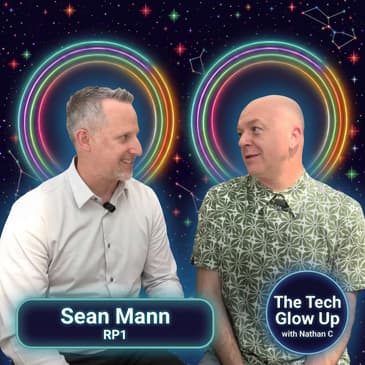

XR is the most fragmented technology ecosystem since the early internet — and Sean Mann, CEO of RP1, thinks the industry is making the same mistake AOL did.
Get a front row seat to the conversations about AI, AR smartglasses, and the future of enterprise technology from Augmented World Expo 2026.
Everyone is building walled gardens. Devices don't talk to each other. Enterprises can't build things that will work everywhere. And every developer who invests in one platform risks watching their skills disappear when that platform does.
The web broke all of this open in the '90s with one thing: an open-standards browser. Sean's argument is that spatial computing needs the exact same move right now.
At AWE 2026, RP1 launched OMBI — the Open Metaverse Browser Initiative — alongside Sneeze, an open-source spatial rendering engine designed to sit inside any web or metaverse browser the way Blink and WebKit do today.
Their goal isn't to win the browser war — it's to make the browser war unnecessary. Walk up to a location in AR glasses, connect to what's around you, and not have to think about which platform you're on. Just like going to a URL.
Key Moments:
- [00:01:25] The walled garden problem: why XR fragmentation mirrors the early internet's AOL era
- [00:04:15] From mass multiplayer to open metaverse: how RP1 found its real mission
- [00:07:07] The SOM: inventing a spatial evolution of the DOM for multi-origin experiences
- [00:10:08] Sneeze: the open engine any web or metaverse browser can embed
- [00:18:44] The Open Metaverse Academic Alliance and partnering with the University of Rochester
Sean's read is that the standards being written right now will determine whether the spatial web is open to everyone or controlled by a few. He's betting on the former — and building the infrastructure to make it happen.
Watch on YouTube → https://youtu.be/KcsIsXU0s8c
Join the Tech Glow Up newsletter on Substack → https://substack.com/@mxnathanc
#OpenMetaverse #SpatialComputing #TechGlowUp #AWE2026 #XR
About Sean Mann
Sean Mann, CEO of RP1, is a visionary leader with 25 years of entrepreneurial and technology expertise. In 2023, he was named 'Innovator of the Year' at the WebXR Awards, ranked as a top 20 Metaverse Industry founder by Metaverse Insider, and a featured Industry thought leader on CNBC.
Sean shapes RP1's strategic direction, drawing from a diverse background in B2C and B2B sectors, including medical, consumer electronics, software technology, fitness, and wellness. His career highlights encompass business transformation, strategic partnerships, and pioneering marketing strategies.
Sean and RP1 are active members of the Metaverse Standards Forum, the Open ARCloud, IEEE, The World Wide Web Consortium
A "glow up" signifies a positive transformation, reflecting the journey of becoming a better, more successful version of oneself.
At The Tech Glow Up, we humanize the startup and innovation landscape by focusing on the essential aspects of the entrepreneurial journey. Groundbreaking ideas are often ahead of their time, making resilience and perseverance vital for founders and product leaders.
In our podcast, we engage with innovators to discuss their transformative ideas, the challenges they face, and how they create value for future success.
If you're a founder or product leader seeking your own glow up, or a seasoned entrepreneur with stories to share, we invite you to join our guest list via this link.
The Glow Up talks with innovators about their big ideas, how they stay resilient in the face of change and how they find and build the value that will drive their future success.
What is a glow up - you might ask?
Glow up is defined as "a positive transformation, often involving significant changes in appearance, confidence, or lifestyle.
We use "Glow up" to refer to the process of becoming a better version of oneself, more attractive, and more successful.
If you're a founder or a product leader who's looking to have a glow up of your own - or if you're a seasoned entrepreneur who's stories can support others, we'd love to hear from you. Please add you name to the guest list with the link in the show notes.
Each episode will also feature a community spotlight for innovative NGOs, non-proffits, and other organizations that are driving innovation and change in their communities. There's another link in our bio for community groups and sponsors to learn more!
Hello, and welcome to The Tech Glow Up from Augmented World Expo. I'm here with Sean Mann, CEO of RP1. Yes. Lanyard sponsor. Some big announcements- Yes this week at AWE. Welcome to The Tech Glow Up.
SeanMan, thank you. It is amazing to see you. I, I love what you do. Um, you've been a shepherd in the industry, and to have these conversations with you is an absolute honor.
NathanYo, it's- Yeah. it's, it's mutual- Yeah for absolutely sure. So Sean, it's a big week.
SeanYep.
Nathancan you introduce yourself? Yep. And, uh, what you've been up to at RP1? Yep.
SeanYep. Well, I'm Sean Mann. I, you know, I'm co-founder and CEO of RP1. I also am a member of the board of the Metaverse Standards Forum. And, uh, today we actually launched OMBI under the Metaverse Standards Forum. And OMBI stands for the Open Metaverse Browser Initiative. Mm-hmm. And it's literally building the next engine for all web browsers and standalone metaverse browsers for full spatial browsing. Oh
Nathanmy
Seangoodness. Absolutely crazy. Yes.
NathanOh my goodness.
SeanYeah.
NathanWe gotta dive in.
SeanYes, 100%.
NathanYep. Uh, so not just metaverse browsers, but all browsers. Yes. Sounds like building a new standard.
SeanCorrect.
NathanA new way to think about data, to think about websites, to think about spatial experiences. Exactly. Yep. All coming together. tell me about the origin of this idea. Like, uh, standards start from a problem usually. Yeah. Uh, what are you out, out to solve? What are you working?
SeanThe, the, the biggest problem is if you look around in the industry, it's extremely fragmented. There's lots of walled garden platforms. Mm-hmm. And this actually reminds us of in the early days of the web- Mm-hmm and the internet, you had companies like AOL and CompuServe that really controlled, and everyone actually thought the World Wide Web was AOL. Absolutely. And someone came in and invented a web browser, and the web browser enabled everyone in the world not only to participate, to build tools, but to actually own all of their data and not be, uh, controlled by any one company or any device. Mm-hmm. That's why we're able to run the entire world on web infrastructure like airports and hospitals, 'cause there's no way for someone to shut down an airport, whether a device goes away or some type of software goes away. In the XR industry, we're at the AOL days of the XR industry.
NathanWhere's that CD?
SeanWhere that CD... And so you're either controlled by platforms. Mm-hmm. You have 10 different directions to go that are not interoperable. All the devices work in their closed ecosystems, so enterprises can't move forward building digital twins, services that will run in the real world, AI, robotics. All these things don't have a open standard to bring everyone together so it all works. Mm-hmm. And so we knew we had to build an engine that works just like the heart of a web browser. You have to reinvent how do you do spatial browsing so that no longer confined to any one system.
NathanSo I was working agency when mobile web was like the thing. Yep. And we spent a lot of time explaining like what content was, why it would be there. Uh, and one of the biggest early hurdles was that it was just so darn expensive- Correct because everything was a one-off custom build- Yes that it was really hard to get people to invest in good design, in good content-
SeanYes
Nathanin interactive anything- Yes because it just cost so much to get started. Yep. And when you're talking about unifying things, making like some standards about how ideas connect- Yes who, how people own things- Yes how people move around. Like 3D development is arguably at least one D more expensive than- 2D development. Yes. Maybe more. Yes. And like, uh, I'm, I'm starting to sort of see some of the magic behind, uh, the standard and the browser. take us back- Okay a little bit. Uh, so th- this is very big news. Yep. This is very future-forward. Yep. I don't imagine like you set out to start a company to like build a new category and also define- Yes the standards behind it. Like what started your journey in- Yeah spatial computing, and like, uh, your passion- Yeah for making dope tech, uh, accessible?
SeanI, I would definitely say you're right. Yeah. If two years ago you asked me that I'll be building the standards- Mm-hmm for the open Metaverse, the future of the World Wide Web, I would've laughed.
NathanMm-hmm.
SeanAnd here I am two years later-
NathanYeah
Seanbuilding the first set of open standards to create an open Metaverse. And so we, you're right, we didn't start there. Mm-hmm. We started a company around solving for mass multiplayer. We heard about the idea of the Metaverse like everyone, and the true version was that we're gonna walk around the real world in virtual spaces and literally be able to connect to anyone anywhere in real time. Mm-hmm. But the reality of the technologies was that I could only be in a snow globe of 20 to 30 people, and it was very hard to move- from one snow globe to another. Mm-hmm. And so we were like, "Wait a minute, if this is a trillion dollar opportunity..." My partner looked at me and said, "We actually solved the scale problem." We can scale not to 20 or 40, but the world's population using 1,000 times less compute, full spatial audio, full 6DoF. Mm-hmm. So we launched the company around that premise, and we're gonna tell the world we solve the Metaverse. But when they s- when they... Everyone looked at us, they say, "Wait a minute. Why do we need that many people?" 'Cause they're looking at it- from a single website understanding of- Mm-hmm how often will you need more than 50, 100 people? And so they didn't understand that we're talking about connecting everyone to all websites. Mm-hmm. And so when we learned that, we started saying, "Wait a minute." Uh, there's a missing piece to this. As we're showcasing the scale, there were really no standards that enabled for people to own content by themselves just like they do websites. Yeah. So we actually sought out to build a metaverse browser actually using WebXR. Yeah.
NathanAmazing. Yeah. it's interesting hearing you talk about these foundational moments because that, like, how do you know who owns what-
SeanCorrect
Nathanis also one of the big gripes that people have about AI right now.
SeanYes.
NathanYes. And how we're, like, scanning and absorbing- Yep and processing everything. right, so this idea that every time you add a layer of technology, of content, of connectivity- Yep uh, there are some very similar problems that you're gonna need to solve. Correct. So thank you.
SeanIf you look at the show, you have all these AR glass manufacturers racing- Mm-hmm to build commercially viable glasses that the world can use, basically replace a mobile phone.
NathanYep.
SeanWell, here's the problem. If I'm gonna wear AR glasses walking into an airport or walking into a, a, my house or a hospital or even down the street, I need to be able to spatially browse the content that is around me. And the same way, when I open up Chrome, I can go to any website. Mm. So think about the new website is your actual physical location, and you need to be able to anchor services like AI, like chess boards, like, um, warehouse software, everything imaginable. But the challenge is the current web browser in WebXR doesn't allow for multi-origin composition. So, so if you think about it- Uh-huh the entire website only- It's a URL
Nathanto your domain.
SeanIt goes to your domain, which I can only look at. I can't see- Mm-hmm what's happening in another domain. Mm-hmm. So we invented what is called the SOM, which is the evolution of the DOM, that allows for multi-origin spatial fabrics and services. So imagine if I walk near a service, I don't have to install it with this technology. Mm-hmm. I literally just connect to it, and it doesn't matter which glasses, what mobile phone, what desktop I'm using. It literally removes the entire friction, just what the web browser did going to websites- Mm-hmm and chat rooms and all this. You don't think about how it works. It just instantly works with any device. Yeah. And the same thing needs to be true with the future of all AR computing.
NathanOh my gosh, I love it. So my brain really wants me to ask, is it easier to explain building a better metaverse or building a spatial web browser? And it's totally a silly
SeanMan, no, it's actually a really, uh, it's a good question, 'cause I see where your mind's going. Yeah. Look, a better metaverse is inclusive. Mm. And I, and I actually wouldn't even call it a metaverse, I'd call it an open metaverse.
NathanEven better.
SeanSo everyone, even... Listen, even the term- Yeah metaverse, I think people either cringe or laugh or cry- Mm-hmm one of the three. Yeah. And if you think about it, the metaverse was predicated that it's the evolution of the World Wide Web. Yep. It wasn't just being in virtual worlds all day long. Mm-hmm. It was, how do we connect the world in 3D spaces and the physical world, just like we do in 2D web pages? Yep. And when that was really hard to do, everyone went out and just built virtual reality, but realized no one really wanted to be stuck in virtual reality by themselves- Oh my gosh or didn't have that connectivity. My argument would be is the open metaverse is the ability for all of us to participate, just like the World Wide Web. So if you wanna be a toolmaker like WordPress- Mm-hmm or Squarespace or s- Wix or Canva, you have that ability. But in a wall garden system, they don't allow you to build the tools. They control the tools. They control what you're allowed or not allowed to do. Mm-hmm. In the World Wide Web, I can build what I want, I can build tools, I can contribute in any way possible. If we wanna win, we have to build the standards that bring us all together- Yeah versus everyone going in different directions.
NathanSo for some innovators, for some CEOs- Standing out, being different, having a moat- Yeah is, like, the whole goal.
SeanYep.
NathanIt's very different than going about the standards route.
SeanCorrect.
Nathanstandards require you to, like, vet your ideas against other people. They require, like, agreement. Mm-hmm. Mm-hmm. They require, like, a lot more convincing than you have to do in the boardroom.
SeanYep.
Nathanand I think you've touched on it a little bit. Can you talk about that mind shift- Yep as a leader?
SeanYep.
NathanI'm curious, like, did you discover new, like, superpowers? Or did you learn new things as you got into the standards side about, about how you approach innovation?
SeanYou know what? I, I, I appreciate standards far more that I am now involved with them. Um, the reason why the web works the way it does today is because standards exist. Yep. And a lot of people just take it for granted that a website works, all these tools work, devices just connect. Mm-hmm. But without the standards to make that possible, it wouldn't happen.
NathanYep.
SeanWe're seeing that today. Right now, if you buy one AR glasses and you have another AR glasses, can they talk to each other? Can they interact? Can I call someone using any device? Think about when I pick up an iPhone and I conne- and I call you and you have an Android, we don't have to be concerned that it works. But when you talk about XR and digital twins and spatial computing, it is all fragmented. Oh, yeah. So we realized the missing piece was an open standard that we can all use. And at the heart of actually current web browsers, there is something called Blink and WebKit. Mm-hmm. Those are the actual engines that make web browsers possible. Mm-hmm. And those are all open source projects. We announced Sneeze- I love it which is the spatial version of Blink, that it can be embedded into current web browsers- and standalone metaverse browsers. But what that does, it standardizes that when I build a spatial fabric- Mm-hmm which is the evolution of a website, I know it'll be rendered by anyone using the open engine. More importantly, it, it empowers AR glass manufacturers to take that. So if you look at the Quest 3- Mm-hmm they didn't invent their own browser. They took Chromium and Blink, branded it the Meta Quest browser- Mm-hmm and it works. So now you know if you build a website, it will work on the Quest browser. Mm-hmm. So we're basically building an engine that enables them to do that on all those different devices. Mm-hmm. More importantly, it brings the community together now to build the s- tools to deploy those spatial fabrics.
NathanMy brain is, like, very interested in, uh, a spatial platform- Mm-hmm that's also sort of backwards compatible towards websites.
SeanYep.
NathanAnd, like, I just had this light bulb of a thing where like, wait, that means there starts to become almost a continuum of spatial content-
SeanYes
Nathanof spatial responsive content-
SeanCorrect
Nathanthat's not just about the size of your device- Yep but, like, relates to what sensors do you have- Yep and, like, what's around you.
SeanCorrect.
Nathanhow much space do you have to navigate?
SeanYes.
NathanWild! Yes. Uh, and that, like, you might, you know, if you're looking on a Kindle, it's text. Yeah. And if you're looking in your, you know, spectacles, it's animated.
SeanCorrect.
NathanAnd if you're in a Vision Pro, it's maybe fully immersive.
SeanYes.
NathanUh,
SeanYeah, and so-
NathanDesigners are gonna be mad.
SeanWell, you know what? I think this- Or
Nathanhappy, honestly
SeanI think designers will be happy- Yeah because they finally, instead of having to pick and choose, so think about it. Mm-hmm. If you're beginning in this industry- Yeah do I become a Unity developer? Do I use Unreal? Do I create something in WebXR? I have a thousand different options that are all- Mm-hmm not interoperable and go in different directions. Yeah. If you standardize this, now it makes it easy to say, "I now know how to build- Yeah this 3D version of a website that will work across all applications and all devices." So this actually makes it easier for people to actually join and start building. Yeah. So if you look at, like, platforms like Altspace- Mm-hmm you learn those tools. You learn how to build. Company goes away, you now lost your identity as a developer because now you have to learn something from scratch. Mm. That really doesn't happen with the web.
NathanYeah.
SeanThe tools just get better, but the standards allow that to be, you know, continue for decades alone, and never have to worry about losing your capacity of understanding how to build websites and what not.
NathanYeah. And the, like, standards and, like, regularness of web- Yep means that it's easy to teach AI how to help you build web. Right? Like, because it works the same way all the time, it's easy- Right to predict and build it. Yeah. I so love it. Sean- I'm having too much fun with standards, which is not a sentence I think I've said before. Yes. Um-
SeanMe too.
NathanThe show is called The Tech Glow Up.
SeanYes.
NathanA glow up is a notable transformation.
SeanYes.
NathanI feel like this is maybe softball. The first one I ask about is the glow up you wanna see in the industry. So like in six months, where does spatial computing need to be going? Where should we be headed?
SeanI think we need to come together and unite in the right, not only standards, but how do we build an open metaverse together? Because it's not about us succeeding in standards or any individual company winning. Without creating this, we can't have something as big as the World Wide Web. Mm-hmm. And so if we wanna succeed and we wanna see this industry advance much faster, if we adopt these new standards, we adopt these new procedures in bringing everyone together, we can all have our piece and we can all win at a global scale. If we don't do this, it's gonna be a long, long journey, and I... We need to change that so we can all really incorporate technologies that we all want. Mm-hmm. But we have to make it easy to be able to use.
NathanYeah.
SeanYeah.
NathanAlways.
SeanYes.
NathanEspecially if we want more people to use it. 100%. Yeah. I love it. Okay, so turning inward- Yeah a little bit.
SeanYeah.
Nathanwhat's your six months glow up, uh, that you're working on at RP1?
SeanYeah, so, um, we are announcing the very first native browser that will use the open standard sneeze. All right. So you don't have to wait for web browsers to use the open engine. You will actually have a live native metaverse browser working literally in a couple of months. And so we are launching this where anyone will be able to download it. We're gonna announce the name in July. The name is unbelievable. It's much better than sneeze, I promise you. Okay. And, uh, y- any in- uh, industry, enterprise, AR glass manufacturer will be able to use this browser to make their device instantly spatialized. And so this will be one giant step for the industry to start moving towards these standards, and then our goal is to work with all the major companies to start incorporating this into their software, their hardware, so we can all unite, uh, together.
NathanHeck yeah. Yeah. Amazing.
SeanYeah.
NathanI love to give people the opportunity to share a hot take, maybe a spicy soundbite- Hmm about technology, culture, you name it.
SeanYep.
Nathando you have a hot take for us today?
SeanSo I don't think people really understand that AR glasses can replace the mobile phone. If you go out and do some research and you look at some quotes from Tim Cook and quite a few leaders in the industry in the tech space, there's enough information out there that says that AR glasses has a massive percentage that it will replace a mobile phone. And it is, that is why you're seeing literally eight major tech companies spending billions of dollars building AR glasses. We are early.
NathanMm-hmm.
SeanI do believe in about two years we're gonna have the form factor and the battery life that is needed to truly replace a fully standalone phone, and I believe that is the hot take where what is coming, we are gonna be able to call each other, show up in our AR glasses, and be able to have this type of interaction. Even though you're going to Japan in a couple weeks, we'll be able to have this in real time with no friction whatsoever. That's when the metaverse becomes special, when I can actually see my loved ones during a birthday when I couldn't fly there. Mm-hmm. Where I can be in a board meeting, or I can actually shop at Costco with my wife that's physically in the Costco store. When we can unite, that that is what the metaverse promises. And I, to be honest with you, hopefully it's not a hot take for many. This is what we're all dreaming about and coming together with.
NathanYeah. Wow. I think this is one of the first times recently s- somebody has said that smartphones will go away. There's a lot of love for the pocketability- Yep that it has power, that it has memory, it has all these things you can off-board. Yep. based on what I saw from Specs earlier this week The price point didn't feel like- Yep accessories. It felt like device, in a way that, like, I... Sort of makes sense in, in this framework.
SeanWell, I paid, you know, what? 12, $1,300 for an iPhone. Mm-hmm. So if AR glasses eventually gets 1,000, $2,000, it'll be subsidized, and it gives you a window into the entire open metaverse. You're gonna be able to
Nathanhave- It's probably gonna need a data plan or might do good with a data plan. It
Seanwill definitely be a data plan. And the cool thing is imagine having an AI companion that help you navigate and be your assistant, or an AI pet, or the ability, like I said, to connect with people. It is going to bring us together. Listen-
NathanOr your own personal software stack.
SeanCorrect. Yeah. Like, I mean, think about it. The World Wide Web, what made it powerful, it brought everyone anywhere in the world together to share information in 2D spaces. The metaverse is just making it possible to bring it as close to reality as possible. Mm-hmm. That's the promise. It's not about virtual spaces or any of these one pieces. It's all of the pieces together, umbrella-ed under a term that was taken for a little while by a company, by a couple of other things. But you can't claim something that is that big, and it's gonna be pretty really darn neat. Yeah.
NathanAnd we've seen what happens when you try to put your own brand on it.
SeanYeah. By, by the way, so I have big announcement for you.
NathanLet's... Tell me, tell me.
SeanSo when the web browser was first created-
NathanMm-hmm
Seanin the early days of before the World Wide Web was really fully formed- Yep universities were the ones that helped drive the standards- Mm-hmm the research, and the, um, interaction with the enterprises to do all the prototyping.
NathanAbsolutely.
SeanWe just found out that we are partnering with the University of Rochester. Barry Silverstein is literally a nine-year veteran from Meta, who learned about the architecture and the standards we're working on, and realized this is what needs to happen for the industry to win. He created the Open Metaverse Academic Alliance that will literally bring all universities together from all over the world- around these new standards to help participate in not only developing the research, the standards that are needed, but uniting the enterprises around implementing this throughout the entire world. And so this is a massive, uh, start, a momentum where not only do we have the Khronos Group and the Metaverse Standards Forum, but we're gonna bring all the universities together around the next standards to create truly the open metaverse. So it's a pretty big deal.
NathanIt's a pretty big deal. Yeah. Yeah. Amazing. Yeah. Sean, I've always been in awe at how you take big ideas and literally make them consumable for anybody. I appreciate that. Like, that's the... That's, like, what your technology does.
SeanYes.
NathanUh, and I use it all the time as an example of, like, "Hey, like, content should, like, know enough about you to, like- Yeah fit into your world, not ask you to change into it."
SeanCorrect.
Nathanso I've so enjoyed watching this journey. Watching you grow, adapt, and innovate. And how cool- Yeah to go from waving a flag for a team- Yeah to finding many teams- Yes to come together- Yeah and wave an even bigger flag, together.
SeanYeah.
NathanSo cool. Thank you. Thank you for joining me on the Tech Glow Up at AWE to
Seanshare this all. Thank you so much, Dave. This has been absolutely amazing. Thank you
Nathanso much. Um, amazing.
SeanYes.